Category

Portal

How to become a dance instructor

By Dance, Fitness business management archives and news

It’s International Dance Day today and what a better way to celebrate than sharing some of my top tips on how to make the jump from dance enthusiast to dance fitness instructor.

Moving towards a new career or class concept armed with rhythm and a desire to make people feel amazing, can seem like a dream come true for many. It was for me over 10 years ago now, when I turned my dancing career into fitness and took the giant leap to become qualified and gain a few group instructor licences under my belt. The journey has come with some challenges, like for most, but I have managed to overcome these and gone onto launch my own business and support hundreds of group instructors with their fitness business.

Here I would like to share my top 5 tips on how to get started with becoming a dance fitness instructor.

1. Find your vibe

There are so many different styles of dance and dance fitness as well as a whole host of teaching methods. If you have a passion for a certain style of dance or music then this will start to pave the way towards a certain brand or creating your own class around a specific theme.

There really is something for everyone in dance fitness – for instructors and participants, which is GREAT because we are all so different with what we love and are truly passionate about helping people stay active.

2. Connect with your clients and potential clients

It might sound basic, but what is your market really looking for? This will help shape how you construct your class if you are going freestyle. If they are after something upbeat with a higher intensity then that will let you know what bpm or movement patterns you might look at. Do they already have experience in dancing? Could this be the first fitness dance class they have ever done? Then that will change what you might add in too. The same goes for branded concepts. Choose something that fits you AND your target market will make it a lot easier to sell as well as to connect with.

3. Make sure you have the right qualifications

Ensure that whatever qualifications you have extend to the concept you wish to cover. The first port of call for someone with no fitness or dance background would be to look at a group exercise qualification. Being qualified in the style of class you want to teach will also help you to pick up cover work at a gym or studio which will help you hit the ground running.

4 Reach out to local instructors

If you are looking to teach but you have no experience, why not attend a variety of classes whilst you work out what it is you truly love. Let the instructor know that you’re intending to train up and they will no doubt be able to point you in the direction of other places to go locally or centres to reach out to that might need extra cover.

5. Think outside of the box

If you’re looking for cover work, then sure, it makes sense to offer a class that’s popular in your local area. But if it’s your own class that you’re looking for, perhaps it would be better to stand out in a busy market than offer the same style or concept. There is something magical about not being afraid to be yourself and teaching a class that makes you feel confident and your clients will feel exactly the same when they connect with you.

If you decide to start a career as a dance instructor, you may want to consider investing in fitness management software like Gymcatch to help you manage your schedule, clients and payments.

Image for Handling late cancellations for your fitness business blog post

Handling late cancellations for your fitness business

By Fitness business management archives and news, Gym and studios

In the fitness industry, last-minute cancellations are an unfortunate fact of life.  Therefore, it’s important that you not only factor cancellations into your budgeting and planning, but actively take steps to minimise the likelihood of last-minute no-shows.

However, the issue of cancellations delves beyond mere revenue loss. It involves proper communication with your members or clients, making it one of the most crucial yet sensitive aspects to address. At its core, this isn’t just about accounting; it’s also rooted in customer service, reflecting your business culture, values, and operational effectiveness.

We’ve all encountered scenarios like this: Rise at 5 AM, hastily dress, and arrive just in time for a 6 AM client session. As you check your emails a few minutes ahead, you discover an email from your 6 AM client, announcing their cancellation at 5:40 AM. A frustrating start to the day, right?

That’s why safeguarding yourself and your business through a well-defined policy is imperative. Now, depending on your business type—be it classes, semi-private training, or one-on-one sessions—variations in cancellation policies can be substantial. For personal training clients, a 24-hour cancellation notice, transmitted in writing from the client to the studio owner or trainer, often proves effective. Failure to provide a notice within 24 hours results in a charge—simple and direct.

In class settings, the spectrum widens. Some businesses allow cancellations within a window of 4 to 10 hours before the class without penalties. Exceeding this time frame could incur a minor fee ($5-$20), depending on industry norms. If cancellations extend beyond the permissible limit, several fitness enterprises impose a stringent “no-show” policy, billing participants $15-$30, or even more.

Though policies vary, establishing a cancellation policy is vital. Resist the temptation to be overly accommodating, especially when clients attempt to evade charges.

Handling late cancellations for your fitness business

Josh Leve, the founder & CEO of the Fitness Business Association (FBA) and SUCCEED! conducted research within the Fitness Business Association (FBA) member base and engaged with diverse fitness businesses to outline four strategies for discussing cancellations with clients or class participants.

The research concluded that fitness business owners should promptly integrate the below strategies when it comes to cancellation policies:

  • Set clear expectations: Clearly communicate your policy in every email communication, ensuring no ambiguity. By eliminating confusion about the policy, you preempt potential questions or challenges.
  • Emphasize professional integrity: Convey that the cancellation policy protects not only your time but also that of instructors. Stress that subjective judgment on cancellations would compromise professional integrity, promoting consistency.
  • Be transparent in communication: Provide clients with a concise explanation, framed in a courteous tone. Explain that the 24-hour cancellation policy safeguards your time, clarifying that uniform application ensures fairness and professionalism.
  • Provide flexible rescheduling: Display understanding and flexibility by allowing clients to reschedule canceled sessions within the week. This approach showcases client-centricity while maintaining business integrity.These examples reveal the sensitive nature of the topic. The goal is to avoid embarrassing clients and ensure private resolution of cancellation matters. Conversations of this nature should always remain confidential.

Remember, whether you operate from your home, a studio, or a gym, as a business owner, protecting your enterprise is vital. It’s never too late to implement a cancellation policy. If last-minute cancellations plague your business, it’s time to adopt a cancellation policy and safeguard your earnings. 

Cancellation strategies for your fitness business with automation

The truth is, last-minute cancellations and no-shows are the true challenges. These not only impact your revenue but also hinder the opportunity to fill vacant slots with new attendees.

Cancellations and no-shows may be beyond your control, but their effect on your business and morale is undeniable. Two core strategies can help:

  1. Encourage responsible behavior: Guide your clients to adhere to responsible scheduling and timely cancellations, reducing no-shows and cancellations.
  2. Mitigate financial risk: Protect your business from cancellations through upfront payment at booking and a well-structured cancellation policy.

Research demonstrates that businesses adopting upfront payment experience 40% fewer cancellations. Human psychology dictates that once payment is made, commitment increases. Despite potential concerns about card fees or admin tasks, the benefits far outweigh the drawbacks.

Consider automating tasks through booking software to enhance efficiency and reduce no-shows. Embrace proactive measures to diminish no-shows effectively.

Automating waitlists and refunds streamlines the process and promotes responsible behavior. While cancellations can’t be eradicated, clients adhering to a straightforward cancellation process enhance the odds of minimizing financial loss.

A comprehensive cancellation policy is a necessity for any business. Tailor your policy to your business’s nature and location. Ensure clients comprehend your cancellation and refund policies by incorporating them into the sign-up process, fostering understanding and commitment.

In the dynamic landscape of fitness, cancellations are a challenge, but not an insurmountable one. By embracing strategies to incentivize responsible behavior and adopting a robust cancellation policy, you pave the way for a smoother business journey. Don’t be apprehensive about setting firm terms—stringent policies underscore the value of your offerings, making clients appreciate the privilege of participation.

Integrating a cancellation policy is never too late. Streamline your operations and safeguard your business with Gymcatch’s online booking software and management system, customizing cancellation policies to match your business needs. Embrace these strategies, stay proactive, and keep cancellations from dimming your business’s shine.

Image for How to thrive as a personal trainer blog post

How to thrive as a personal trainer: What’s your niche?

By Fitness business management archives and news, Gym and studios

How do you ensure your job as a personal trainer is benefitting your clients and is highly rewarding for you, too? Here, FitPro, the largest organisation in the UK for fitness professionals, dives deep into how you can thrive – and not just survive – as a personal trainer.

Personal training is a career of early starts and late finishes. Let’s face it: it’s not just a job, it’s a lifestyle. It’s not unheard of for 50 hours spent at the gym to translate into 25 hours of actual personal training – there are often gaps between clients, even if you’re a whizz with the scheduling.

However, a savvy personal trainer will use this time well, getting the admin and client programming done and performing their own workouts. After all, personal training is a strenuous business. PTs must be robust and comfortable being on their feet all day, providing demonstrations of technique, which requires a lot of practice. Not to mention being sociable and energetic all day!

To be a successful personal trainer, you need to gain the right qualifications. Most courses begin with a Gym Instructor (Level 2) qualification, which gives you the basics, before moving on to the Personal Trainer (Level 3) qualification to upgrade your knowledge and coaching skills so you can work with people on a one-to-one basis. There are also specialist qualifications, some of which we will mention here. You also need to be insured, which is a legal requirement for a personal trainer.

So, let’s discover which type of personal trainer you are and how you can thrive in your chosen specialism.

There are many niches to explore as a personal trainer. If you can discern early on what type of coach you’d like to be – for example, working with special populations, athletes or aspiring beach bodies – you can concentrate on building a strong business model with specific skillsets gained through qualifications, plus a solid understanding of the area you’d like to work in. Let’s take a look at a few of those areas here and how you can thrive in them:

1. Special populations

Special populations are diverse. You may choose to work with pre- or postnatal women to facilitate a healthy birth, pregnancy and start to motherhood, or you may work with children to encourage a lifelong love of exercise. Perhaps providing disabled people with training opportunities that support a healthy life is what moves you, or you may choose to work with the ageing population, helping elderly people to enjoy activity in their later years and reap the benefits it brings. Alternatively, you may wish to support those who have been ill or injured, working on a referral basis with other professionals to help clients return to doing things they enjoy. Each avenue offers unique challenges for you.

To thrive as a special population’s personal trainer, you should:

  • meet your client where they are – at their current level of ability – while planning progressive, smart training programmes to aid their development
  • build trust – being patient, a great communicator and having the ability to inspire will help you to build trust with your client
  • know your onions when it comes to your client’s specialist area. Do your homework – but don’t overstep the mark. Refer back to other professionals if you need to
  • build a support network around yourself – having other health professionals you trust and can refer out to gives your client a wider scope of treatments and solutions.

Useful qualifications for a personal trainer working with special populations include Level 3 Exercise Referral; FAI; ViPR Active Ageing; ViPR Kids; and Pre- and Postnatal.

2. Sports specific

Whether you work with elite, semi-professional or recreational athletes, as a sports-specific PT you will be tasked with finding the margins that help make the difference between winning and losing. You’ll need to work well with other team members, such as coaches, managers and physios, to collectively create the ultimate grounding for success.

To thrive as a sports-specific PT, you should:

  • support your client to fulfil their athletic potential, strengthening movement patterns and energy systems that are particular to the sport and athlete
  • be able to work in conjunction with other professionals to create a team around the athlete
  • perform a lot of research into the specific sport you will be coaching athletes for, along with its movement and energy requirements
  • remain up to date with the latest scientific research
  • learn the skill of planning training blocks to work with the sporting calendar and competition needs
  • build trust and rapport with your athlete to create a successful programme.

Useful qualifications for a sports-specific personal trainer include strength and conditioning courses; Olympic weightlifting courses; and SAQ courses.

3. Body transformation

The primary goal of a body transformation PT is to help their clients look better. However, achieving aesthetic goals also increases people’s confidence, self-esteem and self-worth, as well as improves fitness and health. Achieving a weight-loss goal may also help a client to feel mentally stronger and improve classic health markers, such as the risk of heart problems and diabetes.

Once clients achieve their targets, body transformation coaches can progress their clients’ achievements further, for example, building and sculpting muscle or reducing body fat.

To thrive as a body transformation PT, you should:

  • understand muscle anatomy, and how to isolate and train target groups in a variety of different ways
  • understand metabolism and how to provide clients with the best nutrition plans to achieve the transformation
  • help and support clients to change their behaviours so they can make long-term, sustainable changes
  • be brilliant at motivation, to enable clients to remain engaged with their programme
  • be able to market yourself in a visual way to demonstrate the outcomes your programmes can achieve.

Useful qualifications for a body transformation PT include nutrition courses; behaviour change courses; and weight management courses.

4. Health and performance

Working as a health and performance personal trainer is great for those who want to help improve their clients’ health and fitness, feel stronger and fitter, move better and enjoy a more active lifestyle (often without pain or discomfort) – from playing with the grandkids to getting outside for long hikes and everything in between. Health and performance PTs will also work with clients who are recovering from injury or illness and feel they need some extra help to get them to where they want to be.

To thrive as a health and performance PT, you should:

  • understand human movement and, therefore, be able to identify and address movements and systems that require improving
  • be able to progress and regress exercises in creative ways to suit the needs of each individual client – one size does not fit all – finding bespoke ways to help clients overcome their barriers with confidence
  • bring a fun element to your functional training
  • be able to communicate with clients honestly and clearly, explaining the complexities of the human body in a way a client can understand.

Useful qualifications for an HPC include Biomechanics Method; Pain-Free Movement Specialist; ViPR LMT1 and 2.

Whatever your choice of specialism as a PT, it’s important to keep moving forward, adding to your skillset and reviewing your knowledge. Read more about FitPro’s courses here.


Personal trainer

Switching to Gymcatch: some answers to common questions

By Fitness business management archives and news

Switching to Gymcatch is super easy for both; you and your customers. We have helped many fitness professionals make the switch with ease so that they can do more of what they love. Here are some of the most common questions we get asked. 

I don’t want to pay for two systems at once. When do I start paying?

Gymcatch is free for the first month so you have a full month to transition from your old system. If you need longer to transition, just speak to our team who will be able to help you. We don’t want you to be paying until you’re ready!

Is it easy to move my clients over to Gymcatch?

Yes we make it easy for you to import your client base, to create accounts for your clients and for clients to create their own accounts and find you on Gymcatch.  Switching to Gymatch is super easy, there are step by step guides for whichever route you want to use.

Do you have support?

Yes we have live support during office hours and you can book an appointment with our team at any time.

If clients have pre-paid on my old system, can this be reflected in Gymcatch?

Yes, if you have clients who have bought memberships or blocks (or any other product) from you, you can add the equivalent product to their account on Gymcatch. Then when they log in, they’ll see that service there.

How long does it take to set up my Gymcatch account?

Setting up on Gymcatch can take as little as few minutes depending on how the complexity of your business model. If you have a busy schedule and lots of different pricing structures it will take a little longer but even the most complex businesses should be up and running in an hour or so. And if there’s anything you’re struggling with we have set guides for all our features, and a support team ready to take your questions.

How can Gymcatch do what I need for so much less than my old system?

We’ve got a different business model to many of our competitors. We’re priced so that basically any independent fitness and wellness business can afford to use us. Please visit gymcatch.com/pricing for pricing information.

We would rather have more customers paying less whereas more expensive systems concentrate on serving a smaller number of businesses who can pay more.

We don’t compromise on core functionality though. So you get native mobile apps and all the core features an independent fitness and wellness business needs.

But what we don’t offer are features that only a small percentage of our customers will use. But for the core features for you and your clients that has everything you need – we’ve got it covered.

So our pricing isn’t a catch with either an inferior service or hidden charges down the road, we just want to keep our prices low and serve a bigger part of the industry.

What if I decide Gymcatch isn’t for me?

First of all we’d recommend giving it time. We don’t necessarily do everything exactly as you are used to and exactly like your previous system does. Sometimes we find that clients don’t realise just how much functionality Gymcatch has when they can’t see it straight away. So check our feature demos and with our support team who can help.

If after all, though, you decided Gymcatch isn’t the right fit for you, then you can cancel any time. There’s no tie-in or minimum contract left.

Ready to switch? Let us help you run your business! Gymcatch is free for the first month so you can test all its features and functionality. Start saving time, money and increase your revenue!

If you want to start saving time, money and increase your revenue check out our fitness and wellness booking software for more information.


In-person fitness class

How to Price Your In-Person Fitness Classes

By Fitness business management archives and news, HIIT and group

Pricing your fitness classes can be one of the hardest decisions you make as a fitness professional. Charge too little and even a busy class may not be profitable. Charge too much without demonstrating the value behind the price and you may struggle to fill places.

The right price needs to reflect your local market, experience, costs and the type of service you provide. You also need a simple way to put that pricing into practice. With Gymcatch, you can set prices for your sessions, take payments online and offer different purchasing options such as individual classes, packages and courses without manually managing every transaction.

Personal trainer Anna Martin shares her advice on finding a price that works for your clients and your fitness business.

1. Research Your Local Fitness Market

Every area has a different price ceiling. What customers expect to pay will vary according to your location, local demographics and the type of fitness service you’re offering.

Start by looking at comparable fitness businesses in your area.

The closer the service is to yours, the more useful the comparison will be. You can compare the cost of small-group training with a dance fitness class, for example, but they’re different experiences serving potentially different customers. Their willingness to pay may not be the same.

When researching competitors, look at:

  • Price per class

  • Class size

  • Session length

  • Instructor experience

  • Facilities and equipment

  • Packages or passes available

  • Introductory offers

  • Cancellation terms

Competitor pricing gives you a benchmark, not necessarily the price you should copy. Don’t assume that being the cheapest provider will fill your classes. Customers consider the overall experience and value you’re offering, not simply the number on the booking page.

2. Value Your Skills, Education and Experience

Your price should reflect what you bring to the class.

If you’ve been teaching for several years, you’ve built knowledge through both formal education and practical experience working with different clients. That expertise has value. 

So don’t automatically lower your prices because another instructor nearby charges less.

If you’re providing a more specialist service, have significant experience or offer something your competitors don’t, you may be able to justify charging more.

The same applies to the experience surrounding the class. Perhaps you provide high-quality equipment. Maybe your classes deliberately have fewer participants so everyone gets more individual attention. Perhaps you have specialist qualifications relevant to the people you’re training.

Those differences should influence your pricing, and you should make sure customers understand what they’re getting for their money.

3. Calculate the True Cost of Running Each Class

Before deciding what to charge, work out what each class actually costs you.

Venue hire is an obvious expense, but it isn’t the only one. Your costs might include:

  • Venue hire

  • Equipment

  • Travel

  • Insurance

  • Licences

  • Marketing

  • Booking and payment software

  • Payment processing

  • Time spent on administration

  • Customer support outside the class

  • Preparation time

Then work out how many people you realistically expect to attend.

For example, imagine a class costs £60 to run once you’ve accounted for your relevant expenses. If you typically have 10 paying customers, you need to generate more than £6 per person before that class produces any profit.

And don’t calculate everything based on a completely full class. If your maximum capacity is 15 but you normally attract 10 or 12 people, your pricing needs to work at realistic attendance levels.

Using Gymcatch’s booking and payment tools can give customers a straightforward way to reserve and pay for their place online while making it easier for you to manage who has booked.

4. Decide How Much Profit You Need to Make

Covering your costs isn’t the same as running a profitable fitness business. Your pricing also needs to compensate you for your time, expertise and the risk involved in running the business.

Ask yourself how much you need each class to generate for it to be worthwhile.

If a class takes one hour to teach but also requires 30 minutes of travel, setup, customer communication and administration, you’re not really selling one hour of your time.

Capacity matters too. A class limited to six people may need a higher per-person price than one that can accommodate 25 because there are fewer customers across whom you can spread your costs.

Think about the minimum attendance you need to make a class viable and the profit you’d generate at typical and maximum capacity. That gives you a much more useful basis for setting your price than simply looking at what another instructor charges.

5. Keep Your Fitness Class Pricing Simple

A common mistake is creating an overly complicated pricing structure in an attempt to suit every possible customer.

You might end up with different legacy prices, one-off arrangements, manual bank transfers and special deals that become increasingly difficult to manage.

Simple and transparent pricing is easier for both you and your customers. For example, you could offer:

  • A single drop-in class

  • A multi-class package

  • A course

  • An introductory offer

Gymcatch lets fitness businesses create different ways for customers to purchase sessions, including individual bookings, packages and courses. That means you can offer flexibility without having to create bespoke arrangements for every client.

Whatever structure you choose, make it easy for customers to understand what they’re buying, what it costs and any conditions attached.

6. Consider Packages and Multi-Class Offers

Not every customer wants to purchase one class at a time.

Packages can give regular customers a convenient way to purchase several sessions while giving your business greater commitment upfront. The important thing is to price them deliberately.

If a single class costs £12 and a 10-class package costs £100, you’re effectively offering a £20 discount. Ask yourself whether the additional commitment from the customer makes that discount worthwhile.

You could also use packages to encourage different behaviours, such as rewarding customers who commit to attending regularly.

Gymcatch allows you to sell different purchasing options alongside your schedule, helping customers choose and pay for the option that works for them without you having to manually keep track of every booking.

7. Use Discounts Strategically

Discounting can help you attract new customers or encourage particular purchasing behaviours, but it shouldn’t compensate for pricing that doesn’t work in the first place.

Consider using discounts for a specific purpose, such as:

  • Introductory offers

  • Early-bird bookings

  • Referral campaigns

  • Limited-time promotions

  • Specific classes or packages

Gymcatch’s Discount Codes can help you create promotional offers while maintaining your normal advertised pricing.

Set clear rules around each promotion. Customers should understand what the discount applies to and when it expires. That makes promotions a deliberate marketing tool rather than something you offer whenever someone questions the price.

8. Know When to Increase Your Fitness Class Prices

Your prices won’t stay the same forever.

Venue hire increases. Equipment costs more. Insurance changes. Your own experience grows. Inflation affects the cost of running the business. Eventually, your prices will need to change too.

Don’t wait until your classes have become financially unsustainable before increasing them. Review your pricing periodically and look at:

  • Changes in your costs

  • Typical class attendance

  • Profit per class

  • Local competitor pricing

  • Demand for your sessions

  • Additional qualifications or experience

  • Improvements you’ve made to the service

If the numbers no longer work, a price increase may be necessary.

How to Tell Clients About a Price Increase

Price increases are largely a matter of good communication.

Give customers plenty of notice rather than changing prices overnight. Explain clearly:

  • What the new price will be

  • When it takes effect

  • Which classes or packages are affected

  • What happens to anything they’ve already purchased

You don’t need to spend weeks apologising for the decision. If your costs have increased and you’re providing a quality service, changing your price is part of running a sustainable business.

You may lose the occasional customer. But keeping every customer at a price that no longer covers your costs isn’t a sustainable alternative.

Manage Your Fitness Class Pricing with Gymcatch

Getting your pricing right is important. Managing it shouldn’t create another pile of admin.

Gymcatch helps fitness professionals put their pricing strategy into practice by bringing schedules, bookings and online payments together in one platform.

You can create classes and other sessions, set up different purchasing options, sell packages and courses and use promotional tools such as discount codes without relying on manual bookings and bank transfers.

That means customers get a straightforward way to see what’s available, understand what it costs and book, while you get more time to focus on running your classes and growing your business.

Ready to simplify your fitness bookings and payments? Sign up for Gymcatch or book a demo to see how Gymcatch can support your fitness business.

Frequently Asked Questions

How much should I charge for a fitness class?

There’s no single price that’s right for every fitness class. Consider local competitor pricing, your costs, class capacity, experience and the type of service you’re providing. Your price needs to cover the true cost of running the class while leaving enough profit to make it worthwhile.

How do I calculate the price of a fitness class?

Calculate the total cost of delivering the class, including venue hire, equipment, insurance, travel, administration, marketing and other relevant expenses. Add the profit you need to make, then divide that figure by a realistic number of paying attendees rather than assuming every class will be full.

Should I offer fitness class packages?

Packages can work well if you want to encourage customers to commit to several sessions rather than purchasing individual classes each time. Make sure any discount still leaves you with a sustainable margin and set clear rules around how and when the package can be used.

Can Gymcatch manage different prices and packages for fitness classes?

Gymcatch lets fitness businesses create different ways for customers to purchase their services, including individual sessions, packages and courses. You can also use discount codes for specific promotions, helping you manage different purchasing options without relying on manual bookings or payment tracking.

Can customers pay for fitness classes online with Gymcatch?

Yes. Gymcatch supports online payments as part of the booking journey, allowing customers to select eligible fitness services and pay online rather than requiring you to arrange payment separately.

International Women's Day

International Women’s Day fitness heroes

By Fitness marketing and social archives and news

We’ve gathered some of our favourite fitness and wellness heroes for you who live and inspire by doing it their way.

International Women’s Day is a great excuse for us to pay tribute to the women empowering other women through fitness and wellness. Our fitness and wellness heroes come from all over the world, they lead, influence and inspire in different ways, but the one thing they have in common is that special ability to motivate others.

This years’ International Women’s Day campaign #BreakTheBias celebrates a world free of bias, stereotypes, and discrimination.

We’ve gathered some of our favourite fitness and wellness heroes for you who live and inspire by doing it their way.  Also visit our fitness and wellness booking software page for more information.

  1. Kayla Itsines

Kayla is an Australian Personal trainer, co-founder of @SWEAT and creator of the Bikini Body Guide (#BBG). She has made a name for herself in the fitness industry with championing body positivity and the release of #BBG, a 12-week programme with its own hashtag.

Her SWEAT app alone has amassed over 30 million downloads according to Techcrunch with over a million people using it on a monthly basis.

Kayla joined the body positivity movement very early on helping women recognise that everyone is unique and that there is more than one path to health and happiness.  She has been helping millions make health and fitness a part of their life and currently has one of the largest fitness communities out there.

  1. Brittne Babe

Former track athlete and now queen of home workouts, Brittne has helped thousands of women with her no excuses approach. In the past 10 years in industry, Brittne has partnered with STRONG by Zumba, Gymshark and Women’s Best to name a few. She launched an online 21 Day Challenge and the Brittcamp.

Brittne is an influencer who has gained her name due to her very impressive fitness skills. She showcases this well on her YouTube channel giving tons of inspiration for easy-to-do yet effective home workouts.

  1. Natacha Oceane

Youtuber and fitness influencer from London, Natacha has made a name for herself with the release of her science-based training guide, CUT, which has become very popular among her followers. She has now released 4 guides since.

Natacha makes plyometrics look super easy and shares her training routine including recipes, daily. The combination of her exercises has many benefits such as stimulating metabolism and increasing strength.

Last May Natacha donated all her May’s YouTube ad revenue to support causes fighting racism.

  1. Davina McCall

Former Big Brother UK presenter, Davina has been showing off her age-defying body across social channels with workout videos and recipe ideas. Her goal is to encourage everyone in the UK to be healthier and more active whilst having fun.

Over the past few years, Davina has become a UK fitness influencer and has gone to launch Own Your Goals. Most recently she announced a partnership with @Actionmedres for her charity ride Davina’s Big Sussex Bike Ride this July, raising money for sick babies and children.

  1. Cassey Ho

Creator of Pop Pilates, a fusion workout consisting of highly-focused movements, Cassey has helped over 5m people transform their bodies online. These days Pop Pilates has become a global sensation and has one of the largest fitness communities out there.

Her mission to get people stronger hasn’t changed since she launched her YouTube channel and she has been claimed to modernise Pilates, making it truly accessible to everyone following her.

  1. Cat Meffan

Ex-gymnast and dancer now turned yoga teacher, Cat first launched a fitness and travel blog named Imperfect Matter before launching My Soul Sanctuary. My Soul Sanctuary is a platform to inspire yoga practice and personal growth where she shares daily affirmations or mantras and yoga poses.

She has had collaborations with some big fitness brands including Nike, Sweaty Betty and Zico Coconut Water.

  1. Tara Mia Simich

Founder of The Jungle Body a global movement-to-music company offering a range of soul-igniting and beat-driven fitness programmes for everyone in 20 countries around the globe. Tara became addicted to group fitness whilst living in New York and attending fitness classes. On her return to Australia, she was determined to create a fun and sweat workout programme and Konga was born.  A total of eight programmes have since then been created The Jungle Body’s mission is to empower women to feel good about themselves.

  1. Rachael Brathen

Originally from Sweden, Rachael attended her first meditation retreat at age 18. From there she continued visiting yoga studios very week looking to get rid of some the begative memories from childhood.

She then went on to found in 2010 the Yoga Girl®. A movement looking to provide support for healing and expand self-love. The Yoga Girl culture is to allow each person to be who they truly are and it has now a vast community of dedicated practitioners from all over the world.

  1. Charlee Atkins

Charlee is a New York City-based fitness expert, certified by both ‘Certified Strength and Conditioning Specialist’ and ‘Certified Functional Strength Coach’. Her time at SoulCycle led her to set up Le Sweat, and what initially started as a fitness blog quickly evolved into a community of fitness enthusiasts.

She inspires thousands of people to move daily through motivational posts and informational videos. In 2020 she launched Le Sweat app TV.

She has been featured in top magazines such as Women’s Health, Cosmopolitan and Men’s Health.

  1. Wendy Ida

Wendy pushes the standard to prove that age is just a number. At 65 years old she holds two Guinness World Records, one for the Oldest Active Instructor and the other for the most burpees in one minute, a whopping 37.

However, Wendy didn’t start her fitness journey until she reached 43 years of age in a quest to lose weight and overcome a past abusive relationship. Today she holds an incredible record with top awards at NPC Body Building and Figure Championships.

  1. Svava Sigbertsdottir

Icelandic-born Svava is an advocate that if you want things to happen, you must step up and make it happen. She released The Viking Method after trying many different fitness concepts and realising that a combination of them all would give her the lean tight body she was after.

For Svava however is not about looking a certain way but rather feeling confident, powerful, agile, strong and quick. A bold warrior at heart, Svava brings her Viking roots to her training and encourages people everywhere to show up for themselves.

  1. Brooke Siler Pilates

Author of The New York Times’ best-seller The Pilates Body and creator of Tensatoner™️. Fitness trainer to the stars include supermodels Kate Moss, Liv Tyler and Amber Valetta.

Brooke is at the forefront of the Pilates community having trained with protégée Romana Kryzanowska at Drago’s Gym in New York.

  1. Nadia Alkoc

Zumba®️Jammer and personal trainer, Nadia brings great energy to her social media accounts with her vibrant style flying the flag for all Zumba enthusiasts in Scotland and beyond.

  1. Claire Burlison

Founder of one of the biggest fitness concepts in the UK, Clubbercise a dance class with neon lights and uplifting club anthems.  Claire set up her business in 2013 and what started with 2 friends now has around 100,000 people train every week to the biggest and best dance tunes.

Claire is an inspiration to all those women out there who start a business from scratch and have the vision and determination to make it a success.

  1. Rachel Holmes

Group fitness educator and presenter, choreographer, coach and mentor. With over 30 years in the fitness industry, Rachel helps fitness professionals build a successful business and teach amazing fitness classes. Rachel has released over 50 instructional DVDs and many fitness programs for the fitness industry.

Rachel’s extensive knowledge in both the applicable fitness world and the operational aspect of growing a business means that she can be a valuable resource for anyone looking for the next steps.

For more information on our dance class management software and how it can help your yogapilatesdance or personal training business. Get in contact to book a demo or start a free month.


dance class management software

On-Demand fitness library

How to create an on-demand fitness library

By Fitness business management archives and news

Have you been considering creating an online fitness library? You probably have lots of questions about where to start, what software to use, how to price your videos, and how to sell them.

We asked Anna Martin, Personal Trainer and owner at AMF World to give us the inside knowledge on how to create inspiring video content to grow your business.
 

1.Stay tuned to your audience

The first port of call is to listen to your audience. Find out what people actually want and why they want to get it from you. Ask your target audience about class styles, how they want to access it alongside ideal workout duration times workouts to be, how they want the workouts to be delivered and what other information they would want alongside those workouts to make it super effective. Remember your clients want to be told what to do and on what day so point them to the right place in your library As a business owner, the more information and feedback you can receive from your client, the easier it becomes to guide them to the right content in your library.

2.Consider your business goals and how On-Demand fits in

Is this something you want to use in conjunction with live or streamed classes? Is this a completely stand-alone product reaching a different market? Are you making it for a specific business client? What your goals are for this product will dictate how you decide to put it together. If you want it to work in conjunction with something you are already doing, then you need to work out how this integrates and interacts with what you are doing.

For example, are these On-Demand workouts going to be completely different to what you have on your timetable? Or are they designed to be there for those that couldn’t make it to the live classes?  Once you have worked out what the purpose of your On-Demand section is, it will be much easier to form a vision of how you want it to look.

3.Finding the right video solution

Not every fitness professional has a natural aptitude or inclination to digitise their services, the majority would much rather be focusing on running classes and sessions over getting to grips with a new piece of business software. If even the mere thought of introducing tech to your business leaves you in a cold sweat, the chances are you need a simple solution or someone to do it for you. An easy-to-use and affordable platform such as Gymcatch enables fitness professionals to package and sell their products online.

This could be a collection of videos stored on something like YouTube, Facebook Groups or Vimeo platform, then offering the service through your website might be preferable. Check out Wix and V-Healthy for video solutions but there are many more ways of doing it.

4. Monetising from your fitness video content

Are you planning to charge a monthly or weekly subscription? Or are you going to charge per video or per series of videos? This will be impacted by the areas we have talked about in the points above. How will you collect payment? Do you have personal training booking software that can handle recurring payments, or would it be easier to charge one collection at a time? Charging per project or per video may take the pressure off in terms of content creation but a subscription may give you a more reliable sideline.

Check out the point below before you make a decision. Obviously, we are not all providing our fitness expertise and content for people out of the goodness of our hearts so working out how you are going to charge for your services is important. Many fitness professionals charge weekly or monthly subscriptions whilst many others charge per video or per bundle of videos. Whilst charging per project can take the pressure away from the content creation side, a subscription service ensures a more reliable revenue stream.

4.Distributing your video content

If you provide a subscription, what’s your release schedule going to be like? If you say you’re going to release videos every month or week then you have to release those videos if people are already paying for them upfront. From experience, I would always start on the lower side so you’re underselling what you will do and exceeding clients’ expectations. If you promise to release five new videos a week and then you only manage three a month, people will be disappointed. If you edit your own videos rather than just recording them live and leaving them up, factor in the time it’s going to take to get those done.

The most important thing is that this is a viable source of income or client retention, avoid letting it become a viable source of stress by overestimating what you’re able to achieve – especially if you are a one-man-band. When distributing your content my main piece of advice is to start small, it is more important that your content lands as promised to your paying subscribers rather than omitting or delaying content. If you promise five videos per month and can only provide three then your client base will start asking questions of you. Overpromising on content and time, especially for one-man operations like many in the fitness industry is more likely to generate stress than it is to generate a viable income stream.

Thinking of scaling up your fitness business online?

By Fitness industry archives and news

Launching an online fitness business is a super effective way to scale up your operation quickly and reach out to more clients. However, this can be a daunting prospect for most as they can feel a little overwhelmed trying to catch up with this ever more popular online revenue stream.

Many fitness professionals are still attached to costly group-ex format licence fees that do not allow them to invest in their own online booking software. Others may lack the know-how or confidence to run online fitness classes as an effective business proposition. And many don’t have the flexibility to choose how or where they teach as their current programme’s limitations.

Technology today means you can download an app to help you structure your classes and deliver a killer workout from anywhere in the world, whether that is live, virtually or on-demand.

“Creating premium digital content takes time and can be very expensive. We are on mission at SH1FT to make digital first solutions for fitness instructors looking to launch or expand their business online. SH1FT instructors are fully supported to create their digital presence and teach where, when and how they want,” says Will Brereton, Founder of SH1FT.


How to use tech to improve your fitness services

With the environment now stabilizing, fitness instructors are breathing a welcomed sigh of relief as they have had to adapt to so many changes fast in the past few years. There is a number, however, perhaps the most engaged online or who have been running that online experience for longer, who are now looking at how they can use tech to access data to improve their services and take their business to the next level. 

In his latest podcast, Will says “your customers expect to be able to use your products your services in a variety of ways, both offline and digital. So we know that digital fitness is here to stay, and that it will form part of what your consumers are looking for.”

However, if you’re one of the many instructors that’s found maintaining momentum with your digital teaching difficult, you are in good company.

SH1FT is working with Gymcatch to provide group instructors with the tools they need to take bookings, payments and manage their business in the most cost-effective way.

What is SH1FT?

SH1FT is the brainchild of Will Brereton who wanted to build a global community of Group Fitness Instructors that strive to create ‘fitness for life’ so that their class goers can feel great at any age, with anybody. SH1FT is founded on three main values:

TRAIN SMARTER, NOT HARDER: Hard work doesn’t have to be hard on your body. We use smart, safe and simple progressions to ensure that all levels of fitness can be catered for in a single group.
FITNESS FOR LIFE, NOT JUST FOR SUMMER: We believe fitness is about feeling great in your own skin…for the long term!
FOR ANYBODY, WITH ANY BODY: We create workouts that are non-intimidating, simple and inclusive (not to mention fun!).

SH1FT has created a collection of Group Fitness formats that Instructors use to teach live, online, and blended classes. Each workout is taught using their own market-leading App which automates the boring stuff (saving huge amounts of time and money) and gives Instructors an easy and fast way to customise workouts that are unique to them. Instructors are empowered to deliver engaging, personalised fitness classes where, when, and how they want – with zero restrictions.

Online marketing tactics for fitness businesses

By Fitness business management archives and news

In the ever-evolving landscape of fitness and wellness, establishing a powerful online marketing presence has gone from an option to a necessity. As digital screens continue to capture more attention, the process of employing strategic online tactics becomes a pivotal aspect of success. In this article, we navigate through a diverse array of online marketing strategies to empower your fitness business.

Steps to successful online marketing for your fitness business

Creating an impactful online marketing presence is vital for fitness and wellness professionals. As digital the fitness industry becomes increasingly digitised, understanding effective online strategies is without parallel.

Today, Google commands a massive online presence, but it’s social media that claims the majority of people’s time. Over 4 billion individuals possess social media accounts, spending an average of 1 hour and 15 minutes online daily. Major platforms such as YouTube, TikTok, Facebook, and Instagram are facilitating content creation and sharing, opening doors to expansive paid and organic advertising opportunities for brands. Let’s take a closer look.

Building blocks for a successful online fitness business 

A solid marketing foundation hinges on a clear comprehension of your brand identity. Your messaging should encapsulate your values and set you apart within the fitness landscape. Personalization is the key to resonating with your audience, illustrating the tangible benefits your services offer. Authenticity in messaging fosters motivation and shapes purchasing decisions. For example, highlighting that you are a working mom who understands the complexities of fitting exercise around a busy home life, and portraying this messaging to your audience.

  1. Leveraging the power of social proof

Credibility is the foundation of effective marketing, and social proof acts as the anchor. Elevate your messaging with genuine customer testimonials and harness the support of your thriving social media community. Garnering testimonials with proper permissions and encouraging social media follows nurtures engagement, bolstering your reach and reinforcing your reputation.

  1. Mastering Search Engine Optimisation (SEO)

A robust search engine presence is non-negotiable in the quest for online discoverability. While constructing a fully optimized website demands effort and time, explore options like an SEO-optimized page furnished by your booking system. Regular content updates and adherence to Google’s ranking criteria amplify your online presence.

  1. Embracing the paid digital advertising

Paid advertising on platforms like Facebook and Google offers a laser-focused avenue to reach your target demographic. Tailoring campaigns based on demographics and interests accelerates visibility. Grasping the fundamentals of campaign management empowers you to execute effective campaigns independently.

  1. Continual strategic testing

Innovation thrives on experimentation. Begin with controlled tests to unearth strategies that resonate with your audience. Data analysis guides refinement, ensuring resources are directed toward tactics yielding optimal outcomes.This may sound complicated, but it could be as simple as taking a look at your social media in-app analytics and figuring out trends.

  1. Expert assistance

For those seeking professional guidance, local marketing agencies provide invaluable support, especially in deciphering intricate technical aspects. Their expertise fine-tunes your marketing strategy, optimizing returns on investment.

Unveiling insights through data

Digital marketing’s chief benefit lies in the wealth of data it offers. Real-time access to your channel’s performance and audience behavior enables precise evaluation of content success. Analyzing this data before constructing your next marketing plan is a prudent approach to refining your strategies.


The power of video marketing

TikTok has exceeded 1 billion users, ranking as the 7th most popular social network in 2021. Facebook and YouTube hold strong positions atop the popularity charts. With over 500 million daily viewers on Facebook and an impressive 84% of individuals affirming their propensity to purchase products or services after watching videos, video marketing emerges as a compelling strategy.

Navigating social commerce

 Modern consumers expect seamless purchasing directly through social media platforms for convenience. Projections indicate US social commerce sales will soar to $80 billion, offering colossal global potential. Instagram, Facebook, and TikTok lead the way with features like browse, discover, and in-app checkout options, capitalizing on this evolving trend.

Unlocking online memberships

Managing diverse customer packages and schedules can be overwhelming. Introducing online membership packages not only saves valuable time but also enhances client retention and virtual engagement. The allure of online memberships extends to enticing new customers and accommodating larger numbers, a challenge in traditional setups. Gymcatch offers insights on creating memberships that resonate.

Fostering micro communities

Gone are the days of sprawling, disengaged online communities. Privacy-conscious social media users seek authentic connections. Skillful community strategies foster loyalty, providing customers with a sense of value and belonging.

Seamless booking management

Having a solid marketing strategy is just the beginning. Your fitness management software should seamlessly handle bookings. This is where Gymcatch steps in, offering a solution to manage appointments efficiently. Reach out to us for seamless integration.

Direct marketing meets digital marketing

While the digital domain is pivotal, traditional marketing methods still wield substantial influence, particularly on a local scale. Engage with local listing magazines, community bulletin boards, and collaborate with neighboring businesses to foster awareness. As post-pandemic shifts redefine work dynamics, this approach aids in connecting with audiences beyond the virtual sphere.

It is also important to forge meaningful bonds with local groups and associations aligned with your fitness ethos. Participation or sponsorship of community events exposes you to potential customers and augments your local visibility. This symbiotic approach nurtures and expands your fitness community.

In summary

As we conclude our “Get 2023 Ready” series, our goal is to equip you with insights that elevate your fitness business. Stay tuned to our social media platforms for more business management content, offers, and news. Uphold your dedication to the fitness journey and uncover the potential of customer management software, such as Gymcatch, to seamlessly streamline your operations.


Map fitness ranking

Pilates tops the list of the most in-demand exercise

By Fitness industry archives and news, Pilates

Top wellness and fitness trend

Pilates is the exercise discipline that showed the most resilience throughout the ups and downs of the Covid pandemic. Our research shows that the public stuck with, or turned to, Pilates when other exercise disciplines were experiencing tougher trading conditions.

Formed by Joseph and Clara Pilates in the 1920’s when they opened Body Conditioning Gym in New York City, Pilates has evolved through the years while sticking to its original philosophy and principles.

Today over 12 million people enjoy the benefits of Pilates, establishing itself as the top wellness and fitness trend in the UK throughout the pandemic, performing even more robustly than Yoga.

“We have seen a surge for low impact classes. People are increasingly focused on wellness and Pilates offers a great blend of flexibility and strength training,” says Ollie Bailey, CEO at Gymcatch.

The popularity of Pilates

When assessing the popularity of Pilates the main factor was consumer attitudes to the discipline. Pilates enthusiasts, more than in other areas of fitness and wellness, considered Pilates to be an essential part of their routines, rather than a hobby.

Moreover, in a period where people were particularly keen to avoid using health services, we saw consistent feedback that the low-impact, low injury risk reputation of the discipline saw consumers turn to Pilates rather than disciplines that they perceived as riskier.

Finally, Pilates has proved to be a more convenient form of exercise during the past year, as lower intensity and simpler forms of Pilates were perfectly suited to participation at home.

“Pilates has evolved, and demand has increased due to the pandemic with more people looking for mind-body health and overall wellbeing. Thirty minutes a day can be enough to get real results, so it fits into the workday well,” says Joanne Cobbe from JPilates.

Pilates in numbers

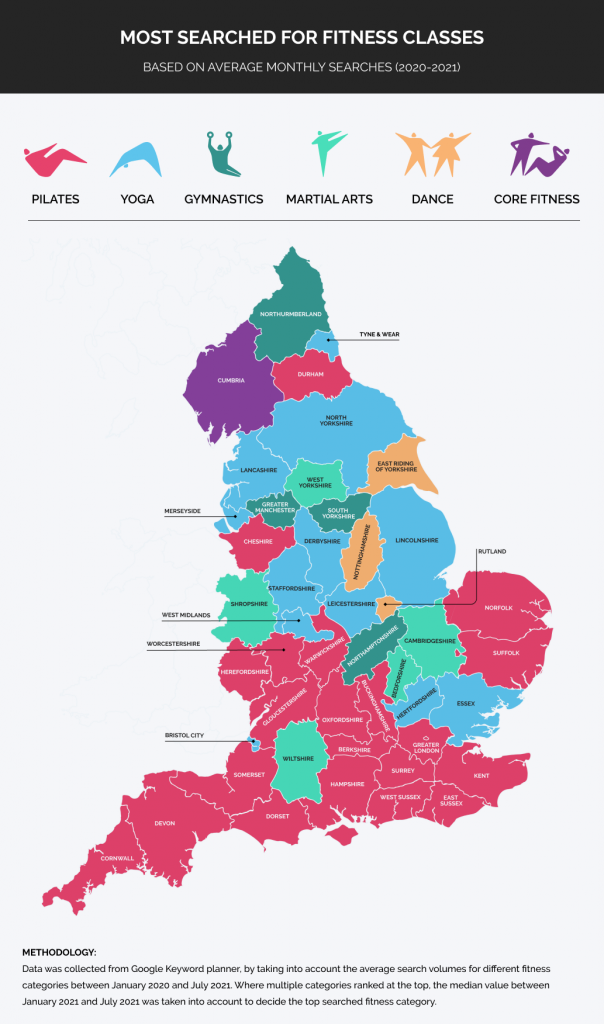
Lower impact exercise saw a 2556% increase in bookings between January and July 2021 on Gymcatch. Pilates alone has seen a 25% increase from 2020 to 2021, despite the incredibly challenging backdrop. In the UK Pilates is a truly national discipline with participation levels slightly higher in London and southern counties but distributed throughout the country with almost half of English counties searching for a Pilates exercise class.

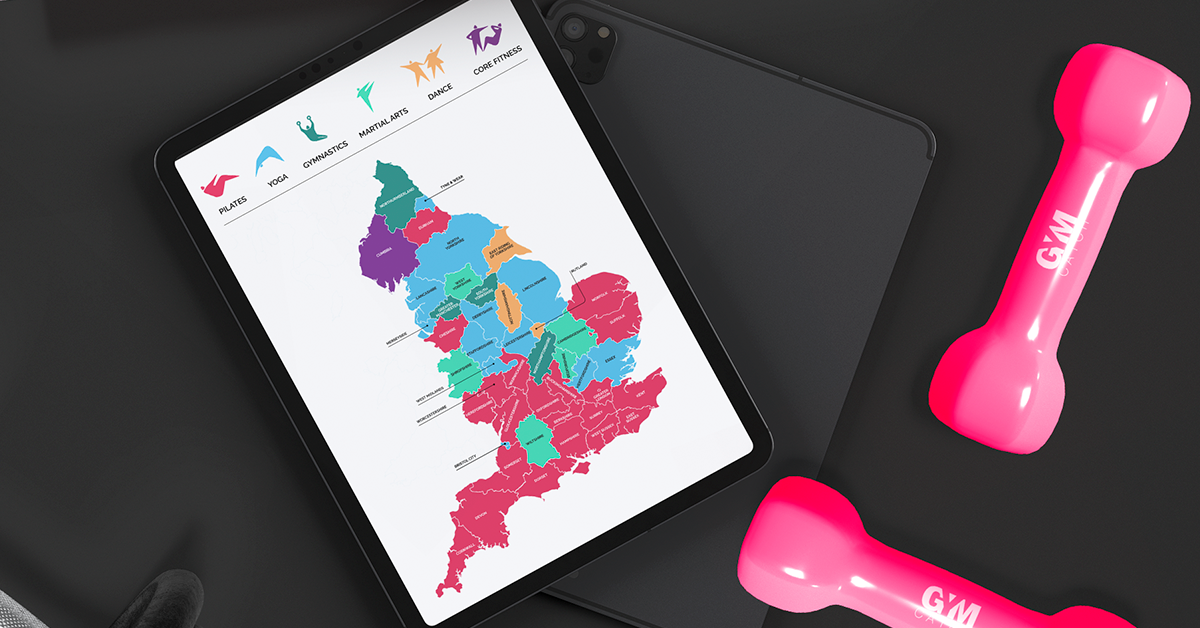
Fitness map display


Virtual Pilates classes are here to stay

Many consumers have fully adjusted to online classes and are now seeking the perfect blend of face- to-face and virtual sessions. But this does not mean that face-to-face delivery is going anywhere. The majority of consumers have returned to in-person delivery and in most cases virtual sessions appear to be supplementing, rather than replacing the in person experience.

Following the end of the national lockdown in the UK in April 2021 we’ve seen a steady recovery of in person delivery. In May 25% of classes were still online only. During June and July 2021 85% of classes were delivered in-personGymcatch expects about 10% of pilates participation to permanently switch to virtual.

“People still want access to On-Demand content or have the option to attend a live-streamed class. By doing both, Pilates instructors can offer more value and more convenience for their clients while adding revenue, new streams and resilience to their businesses,” says Ollie Bailey, CEO at Gymcatch.

For more information on Gymcatch yoga studio software and how it can help with your yoga or pilates business, get in contact to book a demo or start a free trial.