Category

Fitness marketing and social archives and news

How to Write a Fitness Business Plan

By Fitness marketing and social archives and news

A fitness business plan gives you a clear roadmap for launching, running and growing your gym, studio or fitness business. It can help you define your target market, work out how you’ll make money, plan your marketing and understand the resources you’ll need. If you’re looking for funding, investors or finance, a strong business plan becomes even more important.

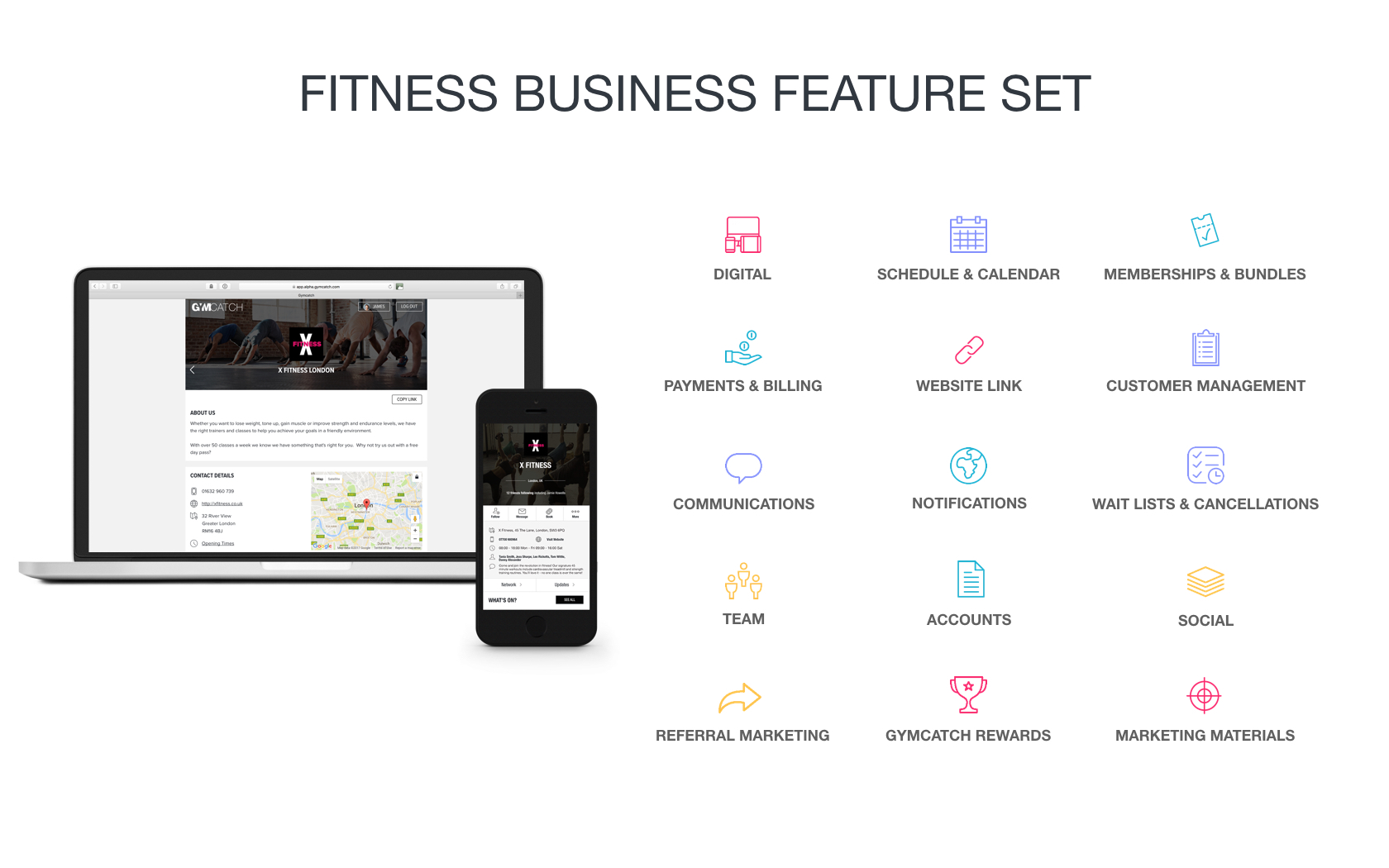
But a good plan needs to translate into how you’ll actually run the business. Gymcatch helps fitness businesses put that operational side into practice, with tools for scheduling, online bookings, payments, customer management, packages and promotions in one platform.

Whether you’re opening a new fitness studio or planning the next stage of an established business, here’s what your fitness business plan should cover.

What Is a Fitness Business Plan?

A fitness business plan is a document that explains what your business does, who it serves, how it will operate and how you expect it to grow.

It provides a roadmap for your business while giving potential lenders or investors the information they need to understand whether your plans are commercially viable.

Most fitness business plans include:

  • Executive summary

  • Company description

  • Market and competitor analysis

  • Products and services

  • Marketing strategy

  • Operational plan

  • Organisational structure

  • Financial plan and projections

  • Funding requirements

  • Appendix and supporting documents

You don’t necessarily need to write these sections in order. In fact, the executive summary is often easier to write last, once you’ve worked through the details of your plan.

Why Do You Need a Business Plan for a Fitness Business?

Even if you aren’t looking for outside investment, creating a business plan forces you to answer some important questions.

Who exactly are you trying to attract? What will you sell? How much will you charge? How will customers find you? How many bookings or memberships do you need to cover your costs?

Putting those answers in writing gives you something concrete to work towards.

A fitness business plan can help you:

  • Define clear business goals

  • Understand your target market

  • Research your competitors

  • Plan your services and pricing

  • Calculate your costs and revenue requirements

  • Identify the people and resources you’ll need

  • Plan your marketing activity

  • Prepare for future growth

  • Support funding or investment applications

Once your business is operating, revisit the plan periodically and compare your assumptions with what’s actually happening.

11 Tips for Writing a Successful Fitness Business Plan

1. Write Your Company Description

Start by explaining what your fitness business is.

Describe your concept, the customers you intend to serve and what differentiates you from other fitness businesses.

Your company description might cover:

  • Business name and location

  • Type of fitness business

  • Business structure

  • Mission and values

  • Founders and their experience

  • Short- and long-term objectives

  • What makes the business different

Be specific.

"Opening a fitness studio" tells the reader very little. "Opening a small-group strength training studio for beginners aged 40+ in Manchester" immediately provides a much clearer picture of the business.

If you’re already operating, include a brief overview of your history and progress so far.

2. Create Your Executive Summary

The executive summary sits at the beginning of your fitness business plan, but it’s often best to write it after completing the other sections.

Think of it as the short version of your entire plan.

Someone should be able to read your executive summary and understand:

  • What your fitness business does

  • Who your customers are

  • What you’re selling

  • Why there’s demand

  • What differentiates your business

  • How you’ll generate revenue

  • Your key financial projections

  • Your growth objectives

  • Any funding you’re seeking

Keep it concise. If you’re presenting the plan to an investor or lender, the executive summary needs to give them a reason to continue reading.

3. Research Your Fitness Market and Competitors

Your market analysis demonstrates that there’s a genuine opportunity for your business.

Start with your target customer.

Who are they? Where are they located? What type of fitness experience are they looking for? What stops them from using existing alternatives?

Depending on your business, you might target busy professionals looking for early-morning classes, parents who need flexible scheduling, experienced athletes looking for specialist coaching or beginners who feel uncomfortable in traditional gyms.

Then research your competition.

Consider:

  • What services they provide

  • Who they target

  • Their pricing

  • Their location

  • Their class timetable

  • How customers book

  • Their reviews

  • Their strengths and weaknesses

  • Where your offering will be different

The aim isn’t simply to prove that you’re better than every competitor – it’s to demonstrate that you’ve identified a specific place for your business within the market.

4. Define Your Fitness Products and Services

Next, explain exactly what customers will be able to buy. Depending on your fitness business, this could include:

  • Group fitness classes

  • Personal training

  • Yoga or Pilates

  • Small-group training

  • Courses

  • Workshops

  • Memberships

  • Class passes

  • Session bundles

  • Online fitness sessions

  • Introductory offers

Explain how each product works and how much you intend to charge.

This is also where your business plan starts connecting with the practicalities of running the business.

Gymcatch lets fitness businesses create schedules and booking options, including individual sessions, courses, packages and passes. Planning these products early helps you think beyond simply "selling classes" and consider how customers will actually purchase and use your services.

5. Build Your Pricing and Revenue Model

Your business plan needs to explain how the business will make money.

Start by deciding how customers will pay. Will you rely primarily on memberships? Drop-in classes? Packages? Personal training appointments? Courses? Or a combination?

Then calculate what those choices mean financially.

For example, consider:

  • Average price per booking

  • Expected bookings per week

  • Class capacity

  • Expected occupancy

  • Membership or package revenue

  • Instructor costs

  • Venue costs

  • Payment processing costs

  • Software costs

  • Marketing costs

  • Other overheads

Don’t build your projections around every class being full from day one. Create realistic assumptions and consider what happens if customer acquisition takes longer than expected.

Gymcatch combines online bookings and payments so customers can purchase eligible services as part of the booking journey, helping you put your planned revenue model into practice.

6. Create Your Marketing Plan

Your marketing plan explains how potential customers will discover your fitness business and what will persuade them to book.

Start with your target audience rather than individual marketing channels. Once you know who you’re trying to reach, decide where those people are most likely to discover you.

Your strategy could include:

  • Search engine optimisation

  • Social media

  • Email marketing

  • Paid advertising

  • Local partnerships

  • Referral marketing

  • Introductory offers

  • Community events

  • Reviews and testimonials

  • Local PR

Then think about what happens after someone discovers you. Can they easily see your timetable? Is your pricing clear? Can they book immediately? Can they pay online?

Marketing isn’t successful simply because someone visits your website or social profile. The journey from discovery to booking needs to be straightforward too.

Gymcatch’s fitness business features help connect that customer journey with online scheduling, bookings, payments, promotions and customer communications.

7. Plan How Your Fitness Business Will Operate

A business plan shouldn’t stop at marketing and financial projections. You also need to explain how the business will work day to day.

Your operational plan could cover:

  • Opening hours

  • Class timetable

  • Appointment availability

  • Booking process

  • Payment process

  • Cancellation policies

  • Customer communications

  • Staffing

  • Equipment

  • Venue management

  • Health and safety

  • Customer records

  • Reporting and administration

This is where choosing the right systems early can prevent unnecessary work later. Rather than managing your timetable in one place, payments somewhere else and customer bookings through messages or spreadsheets, Gymcatch’s membership management brings these core tasks together.

That can make it easier to build repeatable processes as your customer base grows.

8. Outline Your Organisational Structure and Staffing

Explain who’s responsible for running the business.

For a new independent fitness business, this might initially be just the founder. A larger gym or studio could have instructors, reception staff, managers and administrative employees.

Include:

  • Owners and shareholders

  • Management roles

  • Coaches and instructors

  • Administrative staff

  • Contractors

  • Future recruitment plans

Be clear about responsibilities. If you’re planning to grow, think about which tasks actually require another person and which can be automated through your business software.

Automating routine tasks such as bookings and customer communications can help you avoid increasing administration at the same rate as your customer base.

9. Prepare Your Financial Plan and Projections

If you’re seeking finance, this will be one of the most closely examined sections of your business plan.

Your financial plan should provide a realistic picture of what it will cost to launch and operate your fitness business and how you expect revenue to develop. 

Depending on the stage of your business, include:

  • Startup costs

  • Revenue forecasts

  • Cash flow projections

  • Profit and loss projections

  • Balance sheet

  • Break-even analysis

  • Existing financial performance

  • Funding requirements

If you’re forecasting several years ahead, explain the assumptions behind your numbers.

For example, don’t simply state that revenue will increase by 30%. Explain whether that growth is expected to come from additional members, higher class occupancy, new services, additional locations or price increases.

10. Explain Your Funding Requirements

If you’re using the business plan to secure finance, explain exactly how much funding you need and what it will be used for.

Potential uses might include:

  • Leasing or purchasing premises

  • Refurbishment

  • Fitness equipment

  • Staff recruitment

  • Marketing

  • Technology and software

  • Insurance and licences

  • Working capital

Be specific. Investors and lenders need to understand not only how much you’re asking for, but how that investment supports your wider business plan.

11. Add Supporting Information to Your Appendix

The appendix contains evidence and documents that support the main business plan without making the core document unnecessarily long.

Depending on your business, this could include:

  • Market research

  • CVs and professional qualifications

  • Financial statements

  • Cash flow forecasts

  • Lease documents

  • Licences and permits

  • Insurance information

  • Contracts

  • Supplier information

  • Charts and financial tables

Only include material that’s genuinely relevant.

Turn Your Fitness Business Plan into a Working Business

Writing the plan is the first step. The next challenge is turning it into a business that works efficiently every day.

If your plan includes classes, appointments, online bookings, packages, customer payments and promotions, you need systems capable of supporting them as your business grows.

Gymcatch helps fitness businesses manage scheduling, bookings, payments and customers from one platform, so you can spend less time piecing together admin and more time delivering the business you’ve planned.

Ready to put your fitness business plan into action? Sign up for Gymcatch or book a demo to see how Gymcatch can support your fitness business.

Frequently Asked Questions

What should a fitness business plan include?

A fitness business plan should usually include an executive summary, company description, market and competitor analysis, products and services, pricing and revenue model, marketing strategy, operational plan, organisational structure and financial projections. If you’re seeking investment, you should also clearly explain your funding requirements.

Do I need a business plan to open a gym or fitness studio?

You may be able to start a fitness business without a formal business plan, but creating one can help you test whether your idea is financially and operationally realistic. A formal plan is particularly important if you’re applying for finance or seeking outside investment.

How long should a fitness business plan be?

There’s no single correct length. It should be detailed enough to explain your business model, market, operations and finances without adding information that doesn’t help the reader understand the opportunity. A plan being presented to lenders or investors may need considerably more financial detail than one you’re creating for your own planning.

What should I include in a fitness studio financial plan?

Include expected startup and operating costs, your pricing model, revenue forecasts, cash flow projections and break-even assumptions. Established businesses should also include relevant historical financial information. Explain the assumptions behind your forecasts rather than presenting figures without context.

How can Gymcatch help me start a fitness business?

Gymcatch helps turn the operational parts of your business plan into a working booking system. You can manage schedules, customer bookings, online payments and different purchasing options such as packages, passes and courses while using tools designed specifically for fitness businesses.

11 Tips to Get Personal Training Clients Fast

By Fitness marketing and social archives and news

Getting more personal training clients isn’t about finding one secret marketing tactic. The most successful personal trainers combine several approaches: building relationships, creating useful content, generating referrals and making it as easy as possible for interested people to take the next step and book.

Gymcatch helps you turn that interest into paying clients. With personal training booking software, you can let prospective clients view your availability, book and pay online, while tools such as packages, free trials, discount codes and customer communications help you convert new leads and keep existing clients coming back.

If you’re looking to grow your client base, here are 11 practical ways to get more personal training clients.

11 Ways to Gain More Personal Training Clients

1. Make a Positive First Impression

Personal training is a relationship-driven business. Clients aren’t simply buying access to a workout; they’re choosing someone they trust to motivate them, understand their goals and help them make progress.

That makes your attitude and approach important from the first interaction.

Be approachable, interested and enthusiastic when speaking with potential clients. Ask about their goals rather than immediately launching into a sales pitch, and show them how your approach could fit what they’re trying to achieve.

The same principle applies online. Once someone becomes interested in training with you, don’t make them send several messages just to find out when you’re available or how much a session costs. A straightforward online booking journey can help turn that initial interest into a confirmed session.

2. Build Relationships Before You Sell

People buy from people, and that’s particularly true in personal training.

Building a genuine relationship with a prospective client is usually more effective than approaching every conversation as an immediate sales opportunity.

If you work from a gym, talk to members and get to know them. Find out what they’re training for, answer questions when you can and become someone they recognise and trust.

When they’re ready for additional support, you’ll already be familiar to them.

You can then make the next step easy by giving prospective clients somewhere to view your sessions, availability and booking options online rather than relying entirely on face-to-face conversations.

3. Use Content and Email Marketing

Creating useful content is a good way to demonstrate your expertise before someone has ever trained with you.

Think about the questions your ideal clients regularly ask. Depending on your speciality, these might include:

  • How often should I train each week?

  • How do I start strength training?

  • What exercises can beginners do?

  • How can I improve my mobility?

  • What should I expect from my first personal training session?

Turn those questions into useful blog posts, videos, social posts or emails.

Search-friendly content can help potential clients discover your business while they’re researching their fitness goals. Email gives you another opportunity to stay in contact with people who aren’t quite ready to book.

Whenever you create content, give people a clear next step. That could be viewing your available sessions, booking an introductory appointment or signing up for a trial.

4. Find Your Personal Training Niche

Trying to appeal to everybody can make it harder to stand out. Instead, think about the type of client you’re particularly well placed to help. Your niche could be based on a training style, like delivering virtual sessions, or a goal or audience, such as:

  • Strength and conditioning

  • Pre- and postnatal fitness

  • Beginner strength training

  • Older adults

  • Sports performance

  • Weight management

  • Mobility and movement

  • Small-group personal training

A clear speciality makes it easier for prospective clients to understand why they should choose you rather than another trainer.

It also makes your marketing easier. Once you know exactly who you’re trying to reach, you can create content, offers and services around the problems that matter to those clients.

5. Follow Up with Prospective Clients

Someone showing an interest in personal training doesn’t necessarily mean they’re ready to book immediately.

They may need time to think about the cost, work out their schedule or simply build enough confidence to get started.

Following up keeps the conversation going.

That doesn’t mean repeatedly pushing someone to buy. A quick message asking how their training is going or reminding them about an introductory session can be enough.

You can also remove unnecessary barriers by giving prospective clients a simple way to check availability and book when they’re ready.

Gymcatch lets clients find and book available sessions online, so someone you’ve spoken to doesn’t have to wait for another conversation with you before taking the next step.

6. Encourage Referrals and Word of Mouth

Recommendations from existing clients can be one of the strongest ways to find new personal training clients.

If someone is already seeing results and enjoying their sessions, encourage them to tell friends, relatives or colleagues who might benefit from your services.

You can make referrals more appealing with an introductory discount, free session or other incentive.

Gymcatch includes referral marketing features that make it easier for customers to invite friends, while discount codes can be used to create introductory and promotional offers.

Most importantly, make referring someone easy. The fewer steps involved in recommending and booking with you, the more likely clients are to do it.

7. Share Your Expertise Outside Your Own Channels

Your own website and social profiles aren’t the only places you can demonstrate your expertise.

Look for opportunities to contribute useful advice to:

  • Local publications

  • Fitness websites

  • Community websites

  • Podcasts

  • Newsletters

  • Local business groups

Rather than simply promoting your services, offer genuinely useful information that demonstrates what you know.

For example, a strength coach could contribute an article about getting started with weight training, while a trainer specialising in older adults could provide advice about staying active later in life.

Include a clear link back to your website or booking page so interested readers know what to do next.

8. Use Social Media to Start Conversations

Social media can help potential clients become familiar with you before they ever make an inquiry.

You don’t need every post to be promotional. Share useful advice, answer common questions, show what your sessions are like and talk about the problems your clients regularly face.

You can also encourage conversations by asking followers what they’re struggling with or inviting them to submit fitness questions.

Use those interactions as a starting point rather than immediately trying to make a sale.

And when someone is ready to train with you, make sure your profile gives them a clear route to view your services and book.

9. Offer a Free Trial or Introductory Session

Some prospective clients are interested in personal training but aren’t ready to commit without experiencing it first.

A free trial, introductory session or discounted first appointment can lower that barrier.

Use the session to show what working with you is actually like. Ask about the client’s goals, explain your approach and give them something useful to take away from the experience.

Gymcatch lets personal trainers create different booking and purchasing options, including free trials, passes and packages, so introductory offers can form part of the same booking journey as your regular sessions.

Make sure you also have a clear next step after the trial, whether that’s booking another appointment or purchasing a package.

10. Build Relationships with Other Health and Fitness Professionals

Other professionals can become valuable sources of referrals.

Depending on your qualifications and area of expertise, consider building professional relationships with relevant local businesses and practitioners.

The goal isn’t simply to exchange leads. It’s to develop a network of trusted professionals who serve similar audiences and can point people towards appropriate services when relevant.

You might also partner with other fitness businesses, sports clubs or local organisations to run events, workshops or introductory sessions that introduce you to new audiences.

11. Show Testimonials and Client Success Stories

Potential clients want reassurance that you can help people like them.

Testimonials and client success stories provide valuable social proof, particularly when they describe the client’s starting point, experience and progress rather than simply saying that you’re a great trainer.

Ask happy clients whether they’d be comfortable providing a review or testimonial and feature these prominently on your website and other marketing channels.

Where appropriate, you could build a success story around:

  • What the client wanted to achieve

  • Why they chose personal training

  • How you approached their training

  • What progress they made

  • What they valued about working with you

Always get permission before sharing identifiable information, photographs or results.

Turn More Interest into Personal Training Bookings

Finding new personal training clients is only half the challenge. Once someone discovers you, the journey from "I’m interested" to "I’ve booked" needs to be straightforward.

Gymcatch helps personal trainers manage that journey with online scheduling and booking, and allows users to take payments alongside tools for packages, passes, promotions and customer communication.

Instead of managing enquiries in one place, availability somewhere else and payments separately, you can give clients a simple way to find your services and book.

Ready to spend less time on admin and more time growing your personal training business? Sign up for Gymcatch today or book a demo to see how Gymcatch can help you manage bookings, payments and clients in one place.

Frequently Asked Questions

How can I get personal training clients fast?

Start with people who already have some connection to you or your business. Speak to gym members, follow up with previous enquiries, ask existing clients for referrals and promote an introductory session through your existing channels. Make sure prospective clients can easily see your availability and book when they’re ready.

How do new personal trainers find clients?

New personal trainers can build their first client base through networking, referrals, social media, useful online content and relationships with local businesses or other fitness professionals. Choosing a clear niche can also make it easier to attract people looking for your particular expertise.

How can I promote myself as a personal trainer?

Combine online and offline marketing rather than relying on a single channel. Create useful content, post regularly on social media, collect testimonials, encourage referrals, contribute to relevant publications and build relationships in your local community. Every channel should give prospective clients a clear route to learn more or book.

Should personal trainers offer free trials?

A free or discounted introductory session can help prospective clients decide whether personal training is right for them. Keep the offer structured, use the session to understand their goals and give them a clear next step if they want to continue.

How can I turn personal training enquiries into paying clients?

Respond quickly, understand what the prospective client wants to achieve and make booking as straightforward as possible. Clearly explain your services, pricing and availability, then provide an easy way to book and pay without unnecessary back-and-forth.

Can Gymcatch help personal trainers get more clients?

Gymcatch helps personal trainers turn interest into bookings by giving customers an easy way to view availability and book online. You can also use features such as free trials, packages, discount codes, customer communications and referral marketing to support client acquisition and retention.

How can personal trainers keep clients for longer?

Getting clients is important, but retention is what builds a sustainable personal training business. Deliver consistent sessions, track your clients’ goals, communicate regularly and make booking future sessions convenient. Packages and passes can also give clients a simple way to commit to ongoing training.

Dance studio business plan: Push your business to the next level

By Dance, Fitness marketing and social archives and news

Running a dance studio calls for a lot from you. Not only do you need to have a knack for dancing but also for business. Considerable capital is also required as well as a keen attention to detail.

However, the process doesn’t have to be as overwhelming if you reach out to Gymcatch.

Ideas on how to push your dance studio to the next Level

When running a dance studio, there are many tasks that require your time and effort in order to attain success. They include managing your customer relationships, coordinating payments and billings as well as running custom bookings and register information.

You need to have more than just a passion for dance in order for your business to thrive.

There are some ideas and suggestions that you should keep in mind in order to be a successful dance studio owner. They include the following:

First become an apprentice

The surest way of learning how to become an established business owner is by learning the trade through an expert. By observing how the industry works, you’ll be able to observe finer details that you can adopt in your own venture.

Getting such hands-on experience enlightens you on technical aspects that can help grow your business.

It also ensures that you are not completely clueless when you get to run your business. The transition of pushing your business from one level to the next will be much easier.

Create a name for yourself

Having a reputation that precedes you really helps in boosting the growth of your dance studio. By occasionally performing in the dance studio, you will prove that you are also a student of the art. Your clients will relate more and notice that you are not just in the business for profit.

Generate extra income

You should get out of your comfort zone of only holding dance classes at your studio. How about you organize fun events where new hires get to interact through dance? Getting creative will allow you to generate extra income and grow your business.

Hire qualified and trustworthy people

No matter how much you love your studio, it will be difficult for you to perform all the tasks on your own. Hiring people that are nearly as invested as you are in your studio operations will be necessary. Your staff can either make or break your studio which requires you to be careful.

Do not forget to network

Rather than solely spending all your hours in the dance studio, you can go out there and network. By joining groups comprising of other dance studio owners, you will be exposed to many more profitable ideas. It’s also a good way of having people on your speed dial to call on for advice.

How to develop a dance studio business plan designed for success

Developing a perfect business plan will require you to tap into the knowledge you’ve gathered as an apprentice or observer. A formal business plan of your dance studio will be an important counterpart to your passion for dancing. The scheme of the business plan will involve elements such as:

Vision and mission statements

Outlining the core objectives and values of your dance studio set the focus for the entire business plan. Identifying the ‘why’ behind your dance studio helps in keeping you on track with your short-term and long-term goals.

Business description

The business description expounds on what your dance studio has to offer students and the community at large. The best way to drive the message home is by explaining the qualities that set your dance studio apart from the rest.

Market survey

You should be well aware of the type of customers your dance studio will serve. Are you targeting couples, adults, teenagers or kids? Extensive research should be done on your target audience. That way, you can develop effective marketing strategies to grow your business.

A well-written business plan will include a competitive analysis of the target market. Which is critical in ensuring your studio stands out from its competitors. Other questions that may assist you in analyzing the target market include:

· How many studios are competing against you for students?

· Which strategies are your competitors successfully implementing?

· Which challenges will you encounter in reaching your target market?

Business management

A clear layout of the respective authorities in charge of your dance studio is important. Which should preferably be done in a flow chart describing the duties and responsibilities of each employee.

It’s also important to disclose the type of business your dance studio will be. Will it be a partnership, limited liability company (LLC) or another type of business structure? The structure of your business may affect the paperwork you ought to file in registering your business.

Products and services

You should be able to elaborate on the products and services that your dance studio will offer.

What are the different types of classes that you will offer? Will you host any special events? Be specific about the aspects of your dance studio curriculum.

Budget

Running a dance studio requires you to set aside a certain amount of money to get started and maintain the business.

Consider the various costs that will be involved such as your employees’ payroll and advertising or marketing campaigns.

You will also need to disclose the structure through which you plan to charge your students.

Will there be an annual registration fee on top of what each student pays per class? How much will you charge each ticket for special events that you host?

Marketing strategy

The marketing strategy outlines how your business will find new customers and increase sales. Potential investors are usually interested in analyzing the marketing strategy of your business.

You can adopt the 4Ps concept which entails your product, promotion, price and place.

When writing the marketing strategy section of your dance studio business plan, you should strive to make it relevant.

There are certain things can help you in developing a plan and breaking down its cost:

· Showing your uniqueness: Through the unique selling proposition (USP) of your business

· Knowing your clients: By conducting a market survey

· Being flexible: Such as using social media to promote your business physical location

· Conducting extensive research: Based on your competitors and industry reports

· Using visual aids: Such as graphs, charts and images

Appendix

The last section of your business plan is the appendix. It convinces the reader of your business plan that you have paid keen attention to your great business idea.

You can include supporting documents such as licenses, contracts, resumes and marketing materials.

Conclusion

Developing a business plan for your dance studio may not be easy. However, the fulfilment that comes with pushing your business to the next level makes all the effort worthwhile.

Managing your dance studio will be much easier with Gymcatch dance class management software.

How to appeal to experimental and millenial customers

By Fitness marketing and social archives and news
fitness class software

Carry out a quick analysis of health and fitness industry trends, and you’ll be forgiven for thinking the industry had polarized:

– High volume, low price (HVLP) chain operators continue to grow, making up the largest private segments in US and UK markets.

– At the same time, specialist studios and boutiques with singular specialties such as cycling, small group training, boot camp, pilates, yoga and barre continue to see growth.

– 1 in 5 fitness consumers in the US now have two or more fitness-related memberships.

Changes in taste apart, economists would traditionally explain this away by arguing that in competitive, mature markets, pricing moves ever closer to marginal cost (the amount it actually costs to provide services) and price protection is achieved through differentiation, with niche players catering for smaller, ‘connoisseur’ segments.

This is definitely something we’ve observed, but to ascribe these changes solely to the price sensitivity of the health and fitness consumer is to miss other important underlying drivers.

What this analysis fails to take into account are the rapid proliferation of the hyper-local fitness sessions in parks, town halls and churches, for which there is no overarching data but where anyone can benefit from pilates, yoga, barre, HIIT and bootcamp offerings at a reasonable price. Similarly, those HVLP operators are now putting on ever-expanding class timetables. It looks like the price sensitive buyer is also a ‘connoisseur’!

So what’s going on? We think there’s two things at play here:

1. Advancing preferences and the consumer’s love of choice.

As people become more health conscious and increase both the time and percentage of disposable income they spend on fitness, it makes sense that they will want variety in their exercise methods, both in intensity and experience. This is a sample size of just one, but 10 years ago I went to the gym 3 times a week. I now go to Pilates, HIIT, spin and run twice a week – and this costs me £20 less a month to do so. My grandmother’s generation never went near exercise at a senior age, while my mum goes to Pilates twice a week and plays tennis regularly. I know my story is common.

You don’t have to look very far to see this trend. With increasingly low barriers to enter the sector as an instructor, it’s easy for health and fitness consumers to find and book fitness that was previously unknown to them or out of their price range.

2. The millennials

It’s this segment that’s supercharging the drive for more choice and better fitness experiences. With the generational tendency to prefer experiences above material possessions, the variety of workout, social and community feeling of group exercise have become increasingly important factors in millenial buying decisions.

So, where’s the opportunity?

Some fitness providers will be able to cater for these wider tastes with an ever-expanding array of classes and in-facility experiences. If you can deliver on this, fantastic. It can be difficult to manage when your business goes past a certain size and difficult to justify entailed cost on a smaller scale, but it is possible – and we see a number of operators doing it well.

When you can’t do everything, focusing on where you can meet wider riser demand represents a real opportunity for growth. The willingness to spend on fitness is increasing, and if you can tap into the wider exponential growth then you have far more to benefit from than to lose by overstretching. This may well mean you don’t monopolize your customer’s fitness spend, but accepting that in lieu of greater wider earnings is a preferable alternative.

Meeting this need may require more of an open, tailored, marketing approach and a drop-in, flexible, pricing option if you don’t already have one, but it also represents great opportunity – could you be the HIIT option for a regular pilates goer, or the spin option for the yoga fanatic? We see incredible retention across bookers and see this drive for choice as potential for industry earnings rather than threatening existing spend. As a group instructor or specialist operator, perhaps there are partnerships with other fitness providers you can look at to grow earnings together?

Sources: IHRSA Global Report 2016, Leisure Database: 2016 State of the Industry Report, Changes in the fitness world, Business Insider, June 2016

For more information on Gymcatch group fitness management software, and how it can help with your booking, admin and marketing. Get in contact to book a demo or start a free trial.

Fitness marketing tips: 5 steps to boost your fitness business

By Fitness business management archives and news, Fitness industry archives and news, Fitness marketing and social archives and news

Whether a gym, studio, group instructor or personal training business, tried and trusted marketing campaigns can be transformed with digital support. Here we examine 5 well-established campaigns and look at how digital can enhance your marketing returns.


1. Publish your schedule

Ok, so we’ve started with a bit of an obvious one. It’s one thing getting your name out there, but if you don’t tell people what’s on when and make it easy to book, you’re not helping yourself (or your customers).

Knowing that schedules change, we know that this process can be difficult.

Gymcatch helps here by providing one digital source of truth for what’s on when. You can refer people to one web page, or one in-app ‘What’s On’ tab to give them a clear picture of what’s on when. With our unique ‘Appointment Windows’, you can also add one-to-one availability in a flexible way, enabling bookings within a wider time slot rather than having to give a rigid structure that may not work for existing clients or potential customers.


2. Run a referral program

This is a well known strategy, but it is indeed very likely that your best source for new customers are your existing. They’re already buying into your services, so it’s highly likely they know other people with similar backgrounds who would also be interested in what you have to offer.

Nonetheless, referral programs are often poorly advertised and aren’t exactly easy to act upon. If you ask some of your customers, I’m sure they’ll say they’d be willing to recommend your business, but actually getting them to sit down and write that email, send that text or make that phone call is difficult, and you don’t want to be ‘that person’ who keeps asking for something…

The solution here is two-fold. Firstly, keep the referral program front and centre. This can be done easily with posters, emails and verbal reminders. None of this is ‘in your face’ marketing, and it doesn’t put your customers under undue pressure. The second key is to make sure referrals are easy. The best way to do this is to make the referral personally and contextually relevant.

We achieve this within Gymcatch with our prominent session ‘Share’ function, which customers see whilst browsing sessions but also at the completion of a booking. This makes it easy for a potential referee to share specific session details via email, SMS, WhatsApp, Facebook, Twitter etc. with a personalized message suggesting their friend gets in on the action.


3. Offer a free trial

So you’ve secured your referral, but then how do you make it easy for that person to come for their first session? You don’t want to create any barriers or additional admin for them – any extra effort creates an opportunity for them to give up. Making the booking possible without the customer having to put much effort in is key.

Every business will have their own experience and point of view regarding free trials. Some think one visit is enough, but we’ve seen as high as a five-session free pass to encourage an initial habit formation. It may also be that you want to limit which sessions the free pass can be used for. Whatever your strategy, you need to make it as easy as possible to book.

With Gymcatch, you can create a free pass, assign specific sessions to the pass, and set a time limit on the pass itself. You’ll always have complete visibility of who’s redeemed the pass, so you can give them specific focus and give yourself the best possible chance of converting them into a customer.


4. Group wellness programs

We’ve all read the well trodden marketing campaign targeting local business owners to set up a bespoke wellness programs, whether it’s a discounted membership or a value group/bundle discount for class or one-to-one training.

Whilst certainly worth exploring, once established you’ve still got to find a nudge within the business to get them to take advantage of the scheme. One option is to target businesses where your current customers are working – this way you have an internal advocate ready to go. The downside here is there’s no guarantee the client in question is going to be comfortable with pushing your services internally.

Another option is to try and link a group activity or cause to starting your sessions. Matching up a program to tie in with half marathons, ToughMudder (or similar) or a custom challenge you design with your wellness program is a great idea as it can create an initial buzz and motivation to sign up in the workplace, as well as a communal commitment to training sessions.

Gymcatch can help to enable the program and create the training community. With Gymcatch’s custom packages, you can put the discounted program directly on sale to let employees find, book and pay for the package right away. Alternatively, if you don’t want it shown to your existing customers, you can take payments offline and gift the package to enable bookings into your specific corporate sessions.


5. Host an event

A well established marketing idea that applies just as well to gyms, studios, group and personal training marketing is hosting your own event. Whether this is an anniversary or seasonal party, a BBQ, or anything else – an event is a great opportunity for customers to enjoy a little downtime with their fitness community and invite their friends to tag along, which means potential referrals and customers for you.

This marketing idea neatly applies to all of 1-4 above. Making sure the event is published early and promoted regularly on your booking system is a no-brainer, as is seamlessly enabling any referrals that come out of it.

The Gymcatch event share functionality lets business admins post to the Gymcatch Newsfeed (and to other social networks, as well as email and SMS) to continually promote events to the community. All posts include a push and email notification, so you’ll be able to grab your customer’s attention.

We’re all for the traditional fitness marketing campaigns and ideas – they’re well known about for good reason. We just think that they can be optimized with the right online booking software, and we built Gymcatch to do just that.

For more information on Gymcatch group fitness management software, and how it can help with your booking, admin and marketing. Get in contact to book a demo or start a free trial.

Why your fitness business should make the switch to digital

By Fitness business management archives and news, Fitness industry archives and news, Fitness marketing and social archives and news
fitness business software

In this article, we examine how implementing a digital strategy and the right management software for your fitness business can save you time, improve cash flow and increase revenue.

Creating a digital presence

It’s natural to assume this means a website. A well-designed, mobile-optimized website with clear information, booking options and a strategy to boost SEO can be a great way to generate and convert leads.

Your website and your social channels can be great for your business. If they’re poorly designed or outdated, you can do yourself more harm than good.

If you have a website, this should be viewed as your base. You want to drive people to the website to book new sessions, stay up to date with your business news and read or share interesting articles. This means consistently investing time and/or money into your site to make sure that you are delivering content to your customer.

We’d recommend looking at your website as a progression from a base digital presence that includes a booking and payment system. You should be very aware that your site is not a one-off investment – you still have to drive traffic and keep it current in order for it to be a value add. A Facebook page with a link to a good, fitness-focused booking platform can be a good first step to a full website.

Automate booking processes

Our research shows scheduling issues cause 57% of fitness buyers to renege from their purchase, whether that’s for classes or memberships. Ensuring you’re doing everything you can to provide customers with convenience, flexibility and the information they need and want is key.

Specific features such as automating payment, waitlists, cancellation policies, calendar sync, and reminders can also help you to maximize revenue from existing customers. No-shows are costly, especially at peak times.

Offering improved convenience through app and web booking are also proven techniques for increasing consumer willingness to buy. At Gymcatch, 80%+ of bookings are seen on mobile and over 70% are made outside of normal working hours.

Use packages to increase spend and improve cash flow

Having one set class price or one straight membership price doesn’t increase your customer’s ‘willingness to pay’.

Customers are willing to commit more cash upfront if there’s an incentive to do so. Incentives can come in a price break for bulk buys or a pricing table highlighting the middle option as the best value.

Creating pricing tiers and using block purchasing discounts can incentivise increases and ‘trading-up’ in total spend with your business and drive improved cash-flow through upfront purchases.

Applying deeper discounts to underutilized sessions is also a good strategy and gives you a way of communicating additional value to your customer base.

Keeping track of payment and attendance for these sessions can be seriously time consuming, and many booking systems have nowhere near the functionality needed to help (let alone a consumer-friendly buying mechanism), so be sure to scope implementation thoroughly before introducing this feature.

Keep your customers coming back

This sounds obvious, but churn within the fitness industry is a serious problem. For premises-based businesses, the rate can run as high as 40% per annum. The easiest way to maximize revenue is to plug that leak.

Chances are you got into fitness because you know about fitness, so the game-changers are likely to be the things that you find less natural or especially difficult. You don’t know what you don’t know, right?

Our research shows that only 27% of people who want communications from their fitness provider ever receive any at all. Having fitness business software that gives relevant, up-to-date schedules and information (either automated or otherwise) is important.

Creating a community around your fitness platform by enabling social interaction before and after workouts can also be a great way to create habit-forming behavior. 37% of fitness consumers we surveyed said they find themselves more engaged when there’s a social element to their fitness routine.

Rewarding your customers with unexpected gifts (like a free class, for example) and wider loyalty schemes are also proven techniques to increase retention.

Tap into the power of referrals

After location, referrals are the second most powerful influencer when it comes to fitness consumers buying decisions. Tapping into this is an incredibly effective way of driving new revenue.

This can be difficult though. It’s not easy to remember to ask for a referral, and on top of that it can feel awkward or unprofessional – especially if you’ve asked before.

It’s important, therefore, to look at ways to drive this process naturally. Initiatives such as ‘bring a friend for free’, or referral schemes in which successful referrals bring about prizes (free sessions, etc.) can help to align incentives.

It’s common to look at Facebook check-ins and newsfeed posts to drive this. We find ‘tag a friend who may be interested’ on a post tends to work better than staged check ins or post shares.

Using a fitness booking system that embeds the ability to share sessions across different platforms (email, SMS, own, Facebook, Twitter etc.) is a good strategy as it can create time and location specific context straight away. Check out the full range of features Gymcatch have on offer.

For more information on Gymcatch group fitness business software, and how it can help with your booking, admin and marketing. Get in contact to book a demo or start a free trial.

5 marketing tips for your fitness business

By Fitness business management archives and news, Fitness industry archives and news, Fitness marketing and social archives and news
two women training

In this blog post we look at creating a marketing strategy and the place of digital within the mix.

Spend time building a strategy

The best investment you can make in marketing is in the time you spend planning it.

Start off by being clear on what you want to achieve.  Are you focusing on new customers?  Increasing sales to existing customers?  Retaining existing customers?  If you are looking for new customers, who are you targeting?

We’ll deal with retention in a follow-up piece, so let’s focus on new customers.

Key questions here include: Who are your target customers?  Where are they based?  What are they interested in? How old are they and where do they spend their recreational time?  What are their health and fitness goals?  Are they seasonal or all-year round?

The answer to these questions will likely be right in front of you: your existing client base.

Find out what brought those people to you in the first place and not through the door of your competitor across town.  There is no better insight into what will work best, it is immediately available and doesn’t cost a penny.

This research will inform what content you create through the channels we discuss next. Depending on your services and target client, you may find that success stories, wider wellness education and other benefits work well.  Our own research, indicates that simple communication of location, timing of service combined with some level of peer advocacy score well with motivated buyers.


Don’t ignore traditional marketing

When thinking about channels in which to deliver your content, don’t forget traditional local marketing.  With your target customer profile and messaging established, remember that location is the primary driver of fitness purchaser’s choice of provider.

Coffee houses, school networks, business parks and other local small businesses can therefore be great places to leave material or partner to promote your services.  If people do other things locally, it’s likely that they’d do their fitness locally.  Focus on making it easy to discover you.  Let the locals know you’re there.

Marketing materials like cards and posters still work.


3 digital channels

When it comes to digital, for a small fitness business there can be many digital enablers and keeping them all active can be time consuming.  We recommend that you focus on 3 to both ensure you don’t spread yourself too thinly but also to ensure you are constantly testing and iterating.

We lean towards referral marketing tools, Google and Facebook as the areas to look at first.  Referral marketing is powerful, cost-effective and often overlooked, and with 80% of internet traffic driven by Google and Facebook they are simply too important to ignore.

Referral marketing
There are two sides to this. You and your customers.

Our own research and a big body of marketing work shows your existing customers are your very best source for new leads, so be sure to focus on them.

Clearly you can email or text requests and materials they could share.  This can be hard work and, at times, slightly awkward to ask for direct, so thinking about tools you can use (codes, introductory offers, referral schemes) and regularly refer back to in order to build awareness is a good idea.  Asking for shares/tagging friends in Facebook posts can work wonders and cost you nothing.

Other than our own tools (obviously!), we like InviteReferrals and Ambassador as digital options to assist with this.

Google 
Google ad spend can be expensive and really means you need a website.  If looking at this, the first thing to do is to make sure your website has what it needs to convert.  There is no point driving traffic to a site that doesn’t convert clicks into contact.

Boost your Google results organically – better than having to pay for ads, is being found organically from search.  The key to this is that it is a medium to long-term commitment.  So many businesses start with good intentions but, after a couple of months of not seeing results, give up.

Patience is key here: there is no magic bullet.  This is a long-term commitment.  Creating valuable content through blogs, linking via social and ensuring clients use your website regularly can naturally help you to move up the search rankings. Given location is the number one driver of service purchasing, focus on ensuring you rank well for fitness in your area.

When your website was built (and on your admin console if you have a WordPress site) there should also have been initial SEO keywords used and, if you employ an agency, tweaked regularly.  It’s worth checking that this has been done and finding out what they are and how they are being supplemented with your social media and blog posts. Free SEE plug ins, such as Yoast, can really help you with this too.

Facebook
Once you’ve created a Facebook Page, to do Facebook ads it used to be that you needed to get into Facebook Power Editor (requires Chrome browser).

You’ll now see, however, that boosting posts or ads from your business page is possible.  Setting up campaigns, audiences and ad sets in Power Editor is very easy and intuitive.  The audience features is extremely powerful, with a ready ability to define a hyper-local audience with custom interests.

Ensure you’re messaging on the ads is clear and that anyone clicking is really likely to want your service – you most likely don’t want to be paying for clicks that aren’t motivated buyers. You can test whether this is going to work for you with just a few £100 pounds of testing.

If you don’t have access to a graphic designer to make the related images, online marketplaces like Fiverr and Upwork can be a good source of cost-effective resource but ensure you spend some time thinking about what you want the add to convey and research ads that work well, and test ideas with existing clients, so that you can provide a detailed brief. Sketch is a great, easy to use graphic design tool which you only need to pay for once if you don’t want the on-going updates.

We’d recommend:

  • Starting small with a defined local geography and low daily budget
  • Testing 3 or 4 different ad variations
  • Then doubling down on what works


Make buying easy

It’s one thing generating leads, but how are you converting them to paid customers?  If you have the scale, can afford it, and have the digital know-how, using tools such as Infusionsoft, Pipedrive or Salesforce to create detailed sales funnels is a great way to nurture and convert leads.

The reality is, most people don’t, nor want the cost.  Making it easy for customers to learn more and buy is, however, something that is in your control.

If you have a website or can create landing pages, ensure that you’re marketing, whether on or off line, is directing people to a place where there’s a logic to the information and a clear call to action – whether that be to fill in a contact form or make a booking.

Don’t forget about the final stage too – giving the customer the convenience they experience when booking a taxi, restaurant or hotel is important in converting a sale, particularly a new one.  This doesn’t necessarily mean you need an expensive website – simplicity and ease of use trumps form and there are now cost effective tools available to take bookings online and on mobile.

Track your results

Whatever marketing activity you run, it’s a good idea to keep a record of how many leads you generate, from where they came and how many convert to paying customers.  Building a timeline of activities and checking back on your website analytics (if set-up) or direct enquiries via email can give you great insight into what works and what doesn’t.

In terms of more complex digital tracking, setting up events and goals in Google Analytics as well as custom links in emails that can be tracked to linked pages is a good idea.  If you have the know-how, Google Tag Manager is a great tool to use, enabling you to add Facebook and other pixels without having to constantly update your website.

Tag Manager can enable your Facebook ads to be reported in your Google Analytics page, which helps in keeping things in one place (!), but Facebook Power Editor will also give you good insight into how any Facebook campaigns are performing.

Marketing needs patience, attention to detail and data.  There is no magic bullet: your strategy and tactics will evolve over time as you learn what works and what doesn’t.

The best marketing is often simple and focused but it’s easy to jump into the tactics before thinking through the why.  Is it worth reviewing your strategy?

For more information on Gymcatch group fitness business software and how it can help your yoga, pilates, dance business. Get in contact to book a demo or start a free trial.

What’s driving fitness consumers’ decisions to buy your services?

By Fitness business management archives and news, Fitness industry archives and news, Fitness marketing and social archives and news

In this post, we’ll discuss the health and fitness consumer, trends in their buying habits and how the industry can meet them head-on. We surveyed over 400 buyers and prospects and here’s what they told us…

1. Location, location, location

With increasing health and fitness options and improving delivery, consumers are increasingly treating fitness as a commodity. Of course, this is not to say you can’t differentiate in delivery and build strong relationships, but understanding how most buyers initially choose their fitness provider is important to maximizing lead generation.

Our industry research revealed that location was the number one driver for choosing a fitness provider. Conducting a high level analysis of your local community, researching what times to provide sessions for customers, and making your details and schedule easily accessible will be key to your success.

2. Referrals

The second biggest driver in choosing a fitness service is peer recommendation. Ensuring you are enabling referrals (and making them easy to do) is important, both through incentives such as free sessions and with a booking system that readily allows for information to be shared.

3. Convenience

Health and fitness consumers now spend more time on mobile than desktop and are increasingly used to making bookings for services such as taxis, hotels, restaurants and takeaway through via mobile apps. This trend has been growing for some time, and it doesn’t look to be slowing down anytime soon.

Providing the level of convenience consumers experience elsewhere in their lives is important. 27% of our survey participants said they struggle to find important information from their fitness provider, even when looking for it.

4. Social

Our analysis revealed a clear trend towards customers wanting to integrate a social aspect into their fitness regime. In today’s busy yet increasingly health-conscious environment, fitness consumers would like to use their workout as a means to connect with friends, meet new people and maybe even find that special someone:

– 37% are more engaged when they’re able to workout together with friends

– Over 10% are hoping to meet that special person when they workout

– 13% would like to work out but don’t because they don’t want to go alone

Offering and encouraging a way for customers to bring a friend along for a workout, and allowing them to easily refer sessions to friends is therefore important. Delivering non-fitness events for your community is also a good idea.

5. Rewards

Loyalty programs in retail, hospitality and your weekly grocery shop have proved that they can drive increased purchasing frequency and customer retention.

The downside is that creating and managing schemes can be both expensive and time-consuming. Thinking laterally around how you can provide value through discounted packages is one approach. In those instances, try to clearly communicate the saving aspect against the pay-as-you-go alternative. While the up-front payments can be helpful to your cash flow, you don’t want to create a future expectation for deep discounting.

Occasionally, gifting a free session to a loyal or infrequent customer can also have profound effects, with the unexpected nature of the gift generating a deeper psychological impact and overall better relationship between you and your customer.


The bottom line

Location may or may not be in your power to change but what is for certain is that you have the power to influence criteria 2-5. Gymcatch is here to help.


For more information on Gymcatch fitness bootcamp booking software and how it can help your yoga, pilates, dance business. Get in contact to book a demo or start a free trial.

client management software for personal trainers