Category

Fitness business management archives and news

How to open a gym

By Fitness business management archives and news, Fitness marketing and social archives and news

Recently, the fitness industry has significantly developed due to numerous campaigns aimed at fighting obesity and the upcoming trends towards health and fitness. Opening a gym can be a great business idea though there is high competition and you need to prepare yourself properly. Starting a gym may not be an easy task but can be extremely rewarding if you get hardworking and committed enough. To be profitable, your gym model revolves around several key elements and the following steps will help ensure that your business is well planned, rightly registered, and legally compliant.

Plan your business

As an entrepreneur, a clear business plan is essential to help you figure out specifics in your industry and discover some unknowns. You need to ask yourself how much does it cost to open a gym, what is your target market, the business name, and how long it might take to break even. Planning will save you in the long run since once you write down what you are going to do, you will know how exactly to get it done. Here are some points you need to consider in your business plan.

The start-up and running cost

The initial gym capital can vary massively depending on your location, size, type of establishment, and facilities. Opening a gym can cost you from a minimum of around £80,000 to £100,000, covering the equipment outlay and marketing expenses. A larger facility may cost more, a franchise may have lower operational costs, but you may have to pay an authorisation fee; thus, it might or might not be a cheaper option. You can also try to minimise start-up costs by buying already used equipment but ensure that they are thoroughly inspected and serviced before use. Consider other ongoing expenses including, labour cost, gym management software subscriptions, power bills, and rent depending on the location and size of the facility.

Your target market

You need to understand your prospective customers, their interests, hobbies, and needs to focus your attention on a specific segment of people who are more likely to appreciate your services. Include necessary demographic details like age, gender, and occupation; also consider their personalities and lifestyles. For a gym, your preferred clients are individuals who want to lose weight or those who require personal training services to meet their fitness goals. Try and target those clients interested in long term gym commitment to protect your gym from early cancellations.

How to make money through a gym

Besides understanding how to start a gym business, you must know how you get paid. The primary income source is collecting membership due; however, you can generate supplemental revenue by offering exceptional services, including yoga, aerobic classes, kickboxing, Pilates or dance classes, among others.

Get an appropriate business name

Choosing the right business name for your gym is very important and is the cornerstone of the success of your enterprise. Try to match your name with the type of gym and your target market to build some brand identity. Make it simple to pronounce and select a great combination of words to make it more memorable. Do significant research on your competitor’s brand names to avoid similarities, and you can even use a name generating software to make your work easier.

Identify a gym niche

Identify a fitness gap in an area and try to fill it by determining what kind of gym best suits your target market. You can opt for a speciality gym to focus on a particular activity like yoga, dances, cycling, or much more. You can also choose to go for the traditional gym which offers varied workout options in one location, including strength and cardio workouts, personal training, and other fitness classes. You may provide additional services like massage, sauna, child career, and tanning at an additional fee.

A medical gym offers wellness services like physical therapy to help clients recover, prevent or manage a health condition. This type of operation requires professionalism, and you need to provide a variety of educational materials to your clients to boost their physical or mental wellness. A family gym centre includes a variety of workout options including group fitness classes and youth-friendly programs like swimming, sports club, and summer camps for kids.

Get financed

Once you have the relevant content about the industry and have selected your right gym type, you need to figure out where you will find start-up funds. Personal saving is the least expensive option since you pay for your equipment without using another source. If you lack access to all the funds, you can also tie-up with an investor, who supplies you with the funds without necessarily getting involved with the gym operations. However, the investor will expect to make some returns from the investment based on the agreed-upon terms.

Bank loans are the most common ways for most people and the best place to seek funding is from your local bank. A standard bank loan for a small business enterprise will have less interest rate than from other financial institutions. However, you need to present a professional business plan to the bank so they can assess the potential success of your new gym and collateral to secure against your loan. Sometimes getting a bank loan can be a bit challenging, if you don’t qualify for one or you don’t wish to get entangled in lengthy legal proceedings, you can seek funds from micro finances.

Get a strategic location

The growth of your gym heavily relies on whether your potential clients consider it convenient and easily accessible. When thinking about the site, find a space on people’s route home or open ground. First, determine how many clients you can serve in your facility to know how much space you need to find a perfect location that best suits your needs. Find out whether the people in your neighbourhood are more likely to drive in your facility, and this means that you will need a sizeable parking space with a convenient entrance.

You can also choose a location in the busiest part of the city where the surrounding dwellers will only need to walk or take a bike over for a gym session. Also, consider the look and feel of your location, whether it can impress your target clientele. It is crucial to avoid choosing a spot next to businesses that conflict with your operations.

Obtain necessary permits and licenses

To smoothly run your new venture, you need to abide by the set rules and regulations. You, therefore, need to do in-depth research or inquire from a lawyer on the necessary permits required by your local authority. You need to comply with the health and safety executive standards as well as the set FIA code of conduct guidelines. Ensure that you undergo safety training before starting the gym business and subject your employees to adequate training. Your staff needs proper coaching to handle small scale injuries.

Equipment should also be subjected to regular inspection by relevant authorities to prevent causing harm over time. If you plan to add other services such as massage and spa, make sure you adhere to the licensing requirements. You will most likely want some music in your gym to keep customers moving, get a license to avoid infringing music copyrights. In the long run, ensure that all your permits are up-to-date and incase of additional services, always consult with the legal counsel. Note that failure to acquire necessary permits and licenses can result in hefty fines and even business closure.

Get insured

Your employees are also prone to injuries in their line of duty; thus, get an employer’s liability insurance to cover for any compensation claims. You also need to protect your hard-earned money used to purchase the equipment and secure the premise, therefore insure the premise, stock, cash, motor, and premises contents against instances of theft.

Market your brand

Excellent marketing will help your business stand out from others which subsequently results in success. Once you determine your customer base, you can promote your business in various places where your potential clients spend most of their time. Social media is one great medium you can use to generate new membership. Use multiple social media platforms to share video content to showcase the type of workout in your facility. Choose the right platform including Youtube and Twitter but if your target group is generally an older crowd, go for Facebook. You can also use Instagram to send engaging photos of your gym to attract millennial demographic.

Come up with great offers to attract new customers, such as membership discounts. Take an extra step and visit businesses whose employees can be your potential clients and offer them a company discount. You might also consider local advertising by taking out ads in local newspapers or offer free work out days to attract a considerable customer base. Establish a business website that allows target customers to learn more about your gym and the type of services you offer.

Conclusion

Opening a gym can be very profitable, bringing along a sense of life satisfaction. Use the above guideline on how to open a gym to help you actualise your dream and set up a firm foundation for your business. Develop great marketing strategies to increase your customer base by knowing your demographics and getting creative enough to reach out to those individuals. You need to do excellent market research to draw out a profile of your target clients and buy the appropriate equipment that meets the expectations of your customers. With a proper mix of training, skills, commitment, and passion, a gym business can turn out to be a very successful venture.

Don’t forget Gymcatch can provide you with the gym membership management software to help build your dream gym.

Gymcatch partners with HFE to deliver booking and management tools to their instructors

By Fitness business management archives and news, Fitness industry archives and news
HFE

Gymcatch is proud to be partnering with HFE to provide their instructors industry-leading booking and management tools.

HFE is the one of the UK’s leading providers of personal trainer courses and fitness qualifications including exercise to music, yoga, Pilates and sports massage. For them, it’s less the qualification that maters, but more what their instructors become in the process. They challenge each and every student to ‘become more’, to go out into the industry and truly change lives.

To make this to happen they run practical training at over 35 nationwide venues including London, Manchester, Glasgow, Cardiff and Birmingham.  This is backed up by unlimited support from a dedicated tutor and access to a bespoke online learning system which includes exclusive video lectures delivered by leading doctors, physiotherapists, nutritionists and dietitians.

Speaking about an exciting new partnership with Gymcatch, HFE’s Marketing Manager Josh Douglas-Walton had this to say:

“We never have a shortage of companies and organisations wanting to work with us and because of this we have the luxury of being able to handpick our partnerships. One of the most important things for us is that any potential partner embodies of ethos of helping our students and graduates become more. What’s clear with Gymcatch is they can do just that. They have the ability to cater for our wide spectrum of graduates, from personal trainers to group exercise instructors, and with an incredibly impressive feature-set, it’s going to be a very exciting a few weeks, months and hopefully years working together.”

Ollie Bailey, Gymcatch CEO, commented:

“We’re delighted to be parting with HFE. It’s been clear in our discussions that they really care about their community and focus on offering a holistic approach to entering and thriving within the industry. We look forward to supporting this approach and their members in the future.”

For more information on Gymcatch yoga studio software and how it can help with your yoga, pilates and sports massage business, get in contact to book a demo.

Delivering virtual gym classes: It’s so much easier than you might think

By Corporate, Fitness business management archives and news, Fitness marketing and social archives and news

From a cycling class to a high-intensity class, virtual gym classes give customers the flexibility they need to workout whenever and wherever they are, making them more accountable for their own fitness progress. Virtual gym classes have been a fixture for many fitness and wellness businesses for some time. But with isolation rules being imposed across the world, many health and fitness professionals are exploring virtual and online classes for the first time. 

The good news is that demand for virtual workouts for all fitness levels is absolutely enormous!

For some fitness businesses, virtual gym classes will provide a practical stop-gap to continue to provide fitness classes through the challenges of social distancing when studios have to close. 

For other studios and professionals Coronavirus will mark a watershed and virtual yoga, Pilates, dance and other group fitness classes will become a fixture in fitness business’s schedule. We predict that while virtual training will never replace in-person sessions, for certain disciplines, the convenience of being able to join sessions from your living room means that demand online health and fitness will be here to stay. For exercise businesses, this is a fantastic opportunity. 

The great news is that most of what you need to deliver a virtual fitness studio are free or very inexpensive, and it can all be done using equipment you’ve already got. 

How virtual classes work

Broadly speaking there are two options: 

  1. You can deliver pre-recorded online sessions
  2. You can deliver live-streamed classes

Pre-recorded virtual workouts

Pre-recorded virtual sessions are perfect when you’re delivering one-way content. You can’t react to your clients but what a pre-recorded workout class does mean is that you can be really precise. You can record your content and use simple editing software to edit and refine your content so that when it’s made available to your clients it is perfect. So if you teaching something that requires real precision this might be the way to go. 

There is also the time and efficiency benefit of creating a pre-recorded session. Once you’ve done it you can make it available and it can be used (and sold) multiple times. So if you are teaching a course and you want clients to be able to consume the content in their own time, this might be the way to go. 

Suggested video technology:

Suggested editing suites:

Live streaming workouts

In other scenarios, there is no replacement for that live experience. Whether it’s virtual personal training or tuition or online group exercise classes or boot camps there is simple, inexpensive technology to stream virtual workouts.

This solution means that you deliver live classes over the internet to an invited audience who can join in from wherever they are. 

These virtual classes can be one way: whereby you get on with delivering the exercise and your clients follow your instructions. You can also set up two-way online sessions where your client or clients turn on their cameras and you can provide real-time feedback. 

Suggested technology for live virtual classes:

Online bookings and payments

You’ll need a booking system for virtual fitness classes. Because you can’t run the register or take payment in person, online payments are going to be necessary. For some exercise businesses, this might mean using a gym booking software for the first time. 

Make sure your system has specialist tools for virtual fitness classes. This means that only clients that have booked will get access to the log in details for the virtual gym class. This will keep your classes secure and protect your revenue and also save you a huge amount of time because you don’t need to contact each client individually to give them the log in details. 

Taking online payments though a booking system for your fitness business is simple, safe and secure for you and your clients.

Safety

Give some consideration to any safety issues that might arise if you are giving virtual exercise. Do you need to alter and collect variants of your normal waivers and consents? Are there any practical instructions that you should be asking your clients to take before they join one of your online fitness classes? If you need to collect new waivers, your online fitness booking system should have the facility to help you collect this in the booking process.

Whether it’s a short-term fix or a long-term strategy, virtual gym classes are a fantastic opportunity for yoga, pilates, group exercise and personal trainers to show resilience through this challenging time.  

Community value 

If it is possible for your fitness or exercise business to deliver virtual or online classes this will not only help your business through a difficult time but it will also make a huge contribution to the health and wellbeing of the population when people need your expertise, energy and support so acutely. 

If you have any questions on how you can take your classes online our team here at Gymcatch will be very happy to help. Just drop us an email at hello@gymcatch.com or check out how our online fitness services.

How to Create Appointment Confirmation Emails for Fitness Clients

By Fitness business management archives and news, Fitness marketing and social archives and news

Appointment confirmation emails give clients confidence that their class or session is booked and make important details such as the date, time and location easy to find. They can also help reduce missed appointments by keeping upcoming bookings front of mind.

With Gymcatch, you don’t need to manually send a confirmation every time someone books. When a customer makes a booking, Gymcatch can automatically send transactional emails associated with their booking, helping you keep clients informed without adding another task to your day.

The best confirmation emails are simple. Tell clients what they’ve booked, when and where it’s happening, anything they need to know beforehand and what to do if their plans change.

Here’s how to get them right.

When Should You Send an Appointment Confirmation Email?

Send a confirmation as soon as a client completes their booking.

At this point, the email has one main job: reassure the client that their booking has been successfully made and give them a record of the important details.

For appointments booked further in advance, reminders closer to the session can also help keep the booking front of mind. This is particularly useful for personal training sessions, consultations, classes and other appointments where an empty slot represents lost revenue.

Automating these communications with Gymcatch’s booking and scheduling tools means clients receive important booking information without you having to remember to contact everyone individually.

What to Include in a Fitness Appointment Confirmation Email

Clients shouldn’t have to search through a long email to work out when they’re supposed to arrive.

Keep the most important information prominent and make the email easy to scan. A useful fitness appointment confirmation should include:

  • The client’s name

  • The class, appointment or service booked

  • Date and time

  • Location or joining information

  • Instructor or trainer details where relevant

  • Payment information where appropriate

  • What the client needs to bring or prepare

New and returning clients may also need slightly different information.

A first-time client might benefit from directions, information about what to wear or bring and instructions for arriving at the venue. Someone who attends every week probably only needs the essential booking details.

Use a Clear Appointment Confirmation Subject Line

Your subject line should immediately tell the client what the email is about.

There’s no need to make it clever. Something simple such as "Your appointment is confirmed" or "Booking confirmation: Personal training – Tuesday at 6pm" makes the purpose of the email obvious.

Including the appointment type or date can also make confirmation emails easier to find later when clients search their inbox.

Include the Trainer or Instructor

If the client is meeting a particular personal trainer, coach or instructor, include their name in the confirmation.

This is especially useful for businesses with several instructors or clients booking different types of appointments.

You don’t need to include a lengthy staff biography. The client’s main questions are usually straightforward: who am I seeing, where do I need to be and how can I get help if something changes?

Confirm What the Client Has Booked

Clearly name the service, class or appointment.

For example: 60-minute personal training session

is much more useful than: Appointment

This becomes particularly important if your business offers several services, session lengths or class types.

Gymcatch keeps the customer’s booking connected with your schedule, helping clients understand exactly what they’ve booked while giving you a clearer view of your upcoming sessions.

Provide the Location or Online Joining Details

For in-person appointments, provide the venue and address. If your location is difficult to find, you can also include useful directions or a link to a map.

For online fitness sessions, make sure clients know how they’ll access the class or appointment.

Keep this information prominent. A client shouldn’t have to scroll through promotional content to find out where they’re supposed to be.

For new customers, you might also include practical details such as:

  • Where to park

  • Where to enter the building

  • How early to arrive

  • What equipment to bring

  • What to wear

  • Whether they need to complete anything beforehand

These small details can make a first appointment feel considerably easier.

Make Your Cancellation Policy Easy to Find

Plans change, so clients should know exactly what to do if they can’t attend.

Include the important parts of your cancellation or rescheduling policy within the booking journey and make it easy for customers to understand the rules that apply to their purchase.

If clients pay online when booking, it’s particularly important that the relevant terms are clear before they complete their purchase.

Gymcatch helps fitness businesses take payments and manage bookings and cancellations within the same system, reducing the need to manually keep track of changes across different platforms.

Keep Confirmation Emails Short and Useful

A confirmation email isn’t a newsletter. Its primary purpose is to give the customer information about their booking, so avoid burying those details beneath promotions or unnecessary copy.

A simple structure might look like this:

Hi Sarah,

Your personal training session is confirmed.

Date: Tuesday 8 September
Time: 6:00pm
Trainer: Alex
Location: Main Studio, 10 High Street

Please arrive five minutes before your session and bring a water bottle.

If you need to change your booking, please use the booking management options provided.

We look forward to seeing you!

The exact wording will depend on your business, but the principle remains the same: give clients the information they need as quickly as possible.

Use Appointment Emails to Create a Better Client Experience

Confirmation emails might be transactional, but they’re still part of the overall experience someone has with your fitness business.

Think about what a client needs at each stage.

A new personal training client may be nervous about their first session and appreciate clear instructions about what will happen when they arrive. A regular class attendee may simply want confirmation that they’ve successfully secured their usual spot.

Good communication reduces uncertainty.

It can also save you time. The more information clients receive automatically, the fewer messages you need to answer about times, locations and booking details. That’s where automation becomes particularly valuable.

Automate Fitness Booking Communications with Gymcatch

Manually confirming every booking might be manageable when you have five clients. It becomes much harder when you’re running multiple classes or appointments every week.

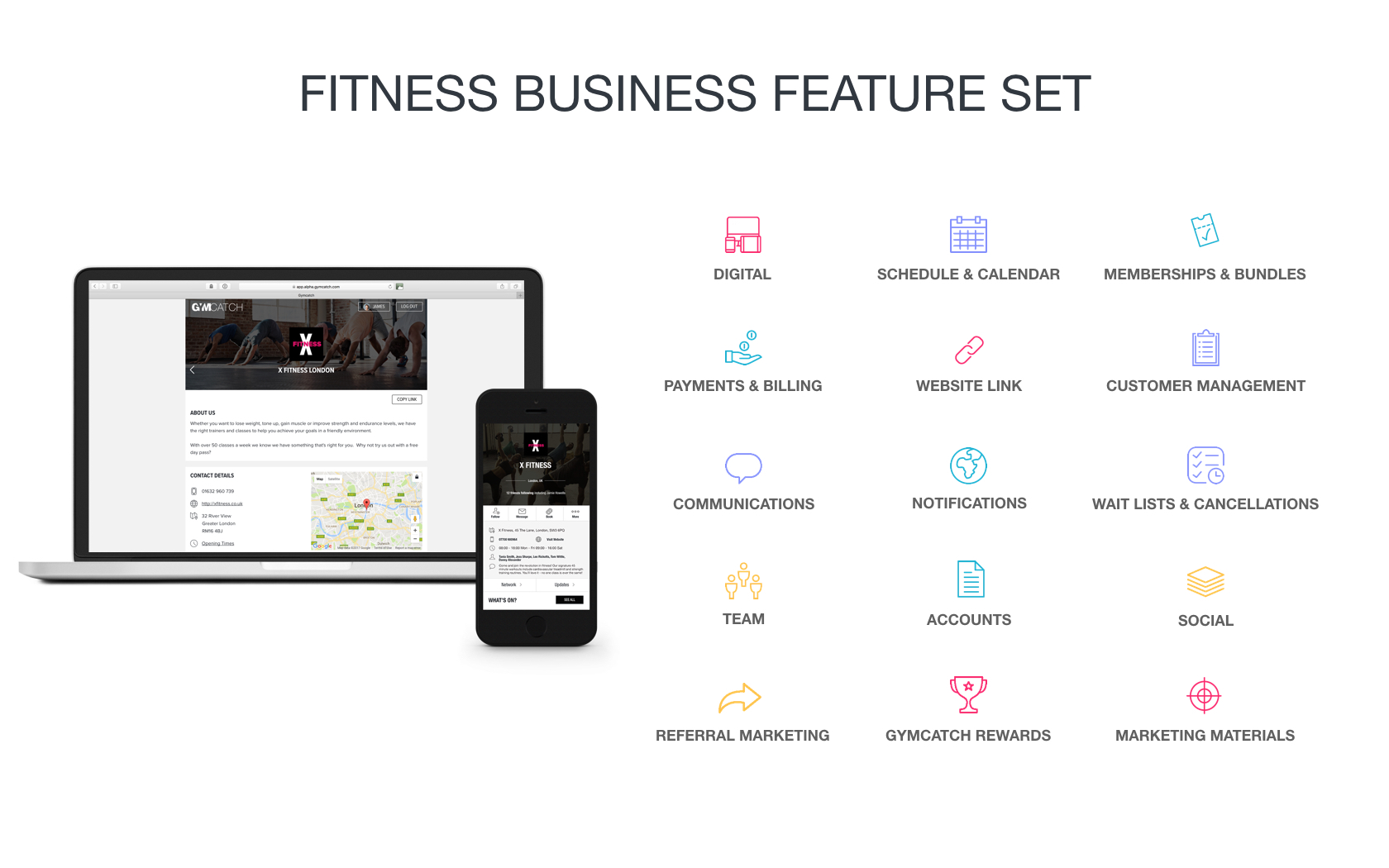
Gymcatch’s fitness business features bring scheduling, customer bookings, payments and communications together, helping you automate routine administration while keeping customers informed.

When customers can book themselves and receive the relevant booking communications automatically, you don’t need to spend your day copying appointment details into individual emails. That gives you more time to focus on your clients and running your fitness business.

Ready to spend less time managing bookings and client admin? Sign up for Gymcatch today or book a demo to see how Gymcatch can simplify scheduling, payments and customer management for your fitness business.

Frequently Asked Questions

What is an appointment confirmation email?

An appointment confirmation email is a transactional message that confirms a customer’s booking and provides the essential information they need to attend. For a fitness business, this will usually include the session or class booked, date, time, location and relevant booking information.

When should I send an appointment confirmation email?

Send the confirmation as soon as the customer completes their booking. This reassures them that their place or appointment has been secured and gives them an immediate record of the booking details.

What should a fitness appointment confirmation email include?

Include the client’s name, appointment or class, date, time, location, instructor where relevant and any preparation or cancellation information they need. Keep the message concise so the most important details are easy to find.

How do I write an appointment confirmation email?

Start by confirming that the booking has been successful, then clearly list the appointment type, date, time and location. Add any essential instructions and explain how the customer can manage their booking if their plans change. Avoid unnecessary promotional content that distracts from these details.

Can appointment confirmation emails reduce no-shows?

Confirmation emails can help because they give clients a clear record of their booking and keep the appointment details accessible. Reminders closer to the appointment can provide another useful prompt, particularly when a session was booked well in advance.

Can Gymcatch automatically send booking confirmations?

Gymcatch helps fitness businesses automate communications associated with customer bookings, so you don’t need to manually send the same appointment information every time somebody books. This keeps important client communication connected with your wider scheduling and booking process.

Can Gymcatch help manage cancellations and rescheduling?

Gymcatch brings booking management together with your wider schedule, helping customers and fitness businesses manage changes without relying entirely on manual emails and messages.

Why should fitness businesses automate appointment communications?

Automation saves time and creates a more consistent customer experience. Instead of manually confirming individual appointments, fitness businesses can focus on delivering their sessions while booking information and routine communications are handled through their management software.

Fitness marketing tips: 5 steps to boost your fitness business

By Fitness business management archives and news, Fitness industry archives and news, Fitness marketing and social archives and news

Whether a gym, studio, group instructor or personal training business, tried and trusted marketing campaigns can be transformed with digital support. Here we examine 5 well-established campaigns and look at how digital can enhance your marketing returns.


1. Publish your schedule

Ok, so we’ve started with a bit of an obvious one. It’s one thing getting your name out there, but if you don’t tell people what’s on when and make it easy to book, you’re not helping yourself (or your customers).

Knowing that schedules change, we know that this process can be difficult.

Gymcatch helps here by providing one digital source of truth for what’s on when. You can refer people to one web page, or one in-app ‘What’s On’ tab to give them a clear picture of what’s on when. With our unique ‘Appointment Windows’, you can also add one-to-one availability in a flexible way, enabling bookings within a wider time slot rather than having to give a rigid structure that may not work for existing clients or potential customers.


2. Run a referral program

This is a well known strategy, but it is indeed very likely that your best source for new customers are your existing. They’re already buying into your services, so it’s highly likely they know other people with similar backgrounds who would also be interested in what you have to offer.

Nonetheless, referral programs are often poorly advertised and aren’t exactly easy to act upon. If you ask some of your customers, I’m sure they’ll say they’d be willing to recommend your business, but actually getting them to sit down and write that email, send that text or make that phone call is difficult, and you don’t want to be ‘that person’ who keeps asking for something…

The solution here is two-fold. Firstly, keep the referral program front and centre. This can be done easily with posters, emails and verbal reminders. None of this is ‘in your face’ marketing, and it doesn’t put your customers under undue pressure. The second key is to make sure referrals are easy. The best way to do this is to make the referral personally and contextually relevant.

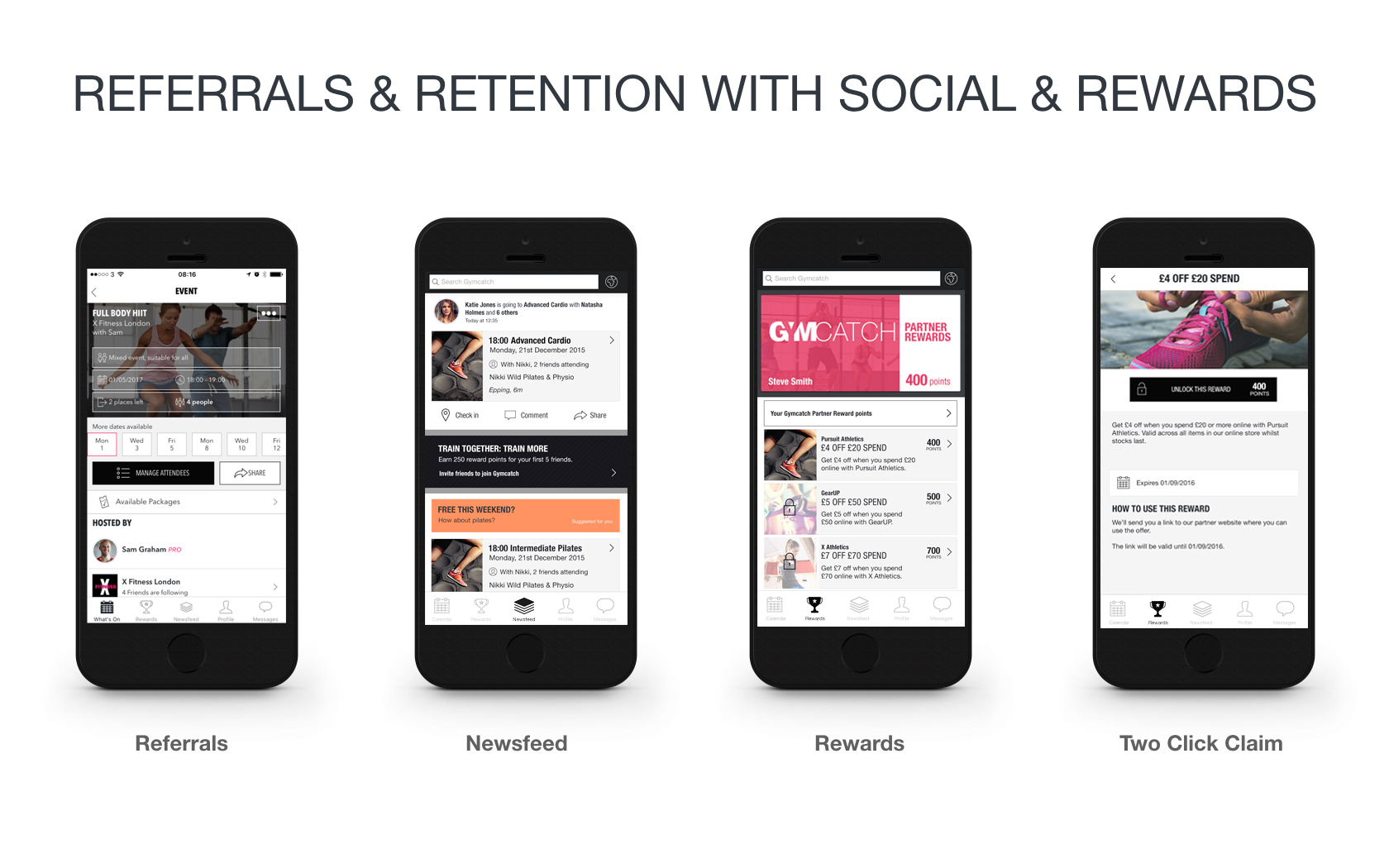
We achieve this within Gymcatch with our prominent session ‘Share’ function, which customers see whilst browsing sessions but also at the completion of a booking. This makes it easy for a potential referee to share specific session details via email, SMS, WhatsApp, Facebook, Twitter etc. with a personalized message suggesting their friend gets in on the action.


3. Offer a free trial

So you’ve secured your referral, but then how do you make it easy for that person to come for their first session? You don’t want to create any barriers or additional admin for them – any extra effort creates an opportunity for them to give up. Making the booking possible without the customer having to put much effort in is key.

Every business will have their own experience and point of view regarding free trials. Some think one visit is enough, but we’ve seen as high as a five-session free pass to encourage an initial habit formation. It may also be that you want to limit which sessions the free pass can be used for. Whatever your strategy, you need to make it as easy as possible to book.

With Gymcatch, you can create a free pass, assign specific sessions to the pass, and set a time limit on the pass itself. You’ll always have complete visibility of who’s redeemed the pass, so you can give them specific focus and give yourself the best possible chance of converting them into a customer.


4. Group wellness programs

We’ve all read the well trodden marketing campaign targeting local business owners to set up a bespoke wellness programs, whether it’s a discounted membership or a value group/bundle discount for class or one-to-one training.

Whilst certainly worth exploring, once established you’ve still got to find a nudge within the business to get them to take advantage of the scheme. One option is to target businesses where your current customers are working – this way you have an internal advocate ready to go. The downside here is there’s no guarantee the client in question is going to be comfortable with pushing your services internally.

Another option is to try and link a group activity or cause to starting your sessions. Matching up a program to tie in with half marathons, ToughMudder (or similar) or a custom challenge you design with your wellness program is a great idea as it can create an initial buzz and motivation to sign up in the workplace, as well as a communal commitment to training sessions.

Gymcatch can help to enable the program and create the training community. With Gymcatch’s custom packages, you can put the discounted program directly on sale to let employees find, book and pay for the package right away. Alternatively, if you don’t want it shown to your existing customers, you can take payments offline and gift the package to enable bookings into your specific corporate sessions.


5. Host an event

A well established marketing idea that applies just as well to gyms, studios, group and personal training marketing is hosting your own event. Whether this is an anniversary or seasonal party, a BBQ, or anything else – an event is a great opportunity for customers to enjoy a little downtime with their fitness community and invite their friends to tag along, which means potential referrals and customers for you.

This marketing idea neatly applies to all of 1-4 above. Making sure the event is published early and promoted regularly on your booking system is a no-brainer, as is seamlessly enabling any referrals that come out of it.

The Gymcatch event share functionality lets business admins post to the Gymcatch Newsfeed (and to other social networks, as well as email and SMS) to continually promote events to the community. All posts include a push and email notification, so you’ll be able to grab your customer’s attention.

We’re all for the traditional fitness marketing campaigns and ideas – they’re well known about for good reason. We just think that they can be optimized with the right online booking software, and we built Gymcatch to do just that.

For more information on Gymcatch group fitness management software, and how it can help with your booking, admin and marketing. Get in contact to book a demo or start a free trial.

Give your customers a better mobile booking experience

By Fitness business management archives and news, Fitness industry archives and news

In this post we explore some key mobile-first enabled features that can help your business.

When you think of the apps you use to buy things, the first ones that come to mind likely have to do with taxis, takeaway, music and shopping. Think: Uber, Spotify, Apple Music, Just Eat and Amazon. We’re willing to bet at least a few of these are on your home screen.

What about your business? Do customers have to text, email or go to your website to book? If so, do you think customers would book more if it was easier? We understand that up until now making mobile convenience available has been prohibitive, with the entry level market-leading full gym booking system costing a painful £65/$75 per month. In a world where your Spotify subscription, business email or social media management tools cost you about £9.99 per month, that’s a lot to ask for. The fact that one of those offerings promotes offers within their app from your competition is also a bit of downer…

We see 70%+ of all bookings being made outside of standard working hours. It goes without saying that giving customers a mobile experience with a better class, studio or gym booking app will increase their willingness to book and improve customer satisfaction. On top of this, it’ll also save you the time you spend manually confirming and tracking bookings.

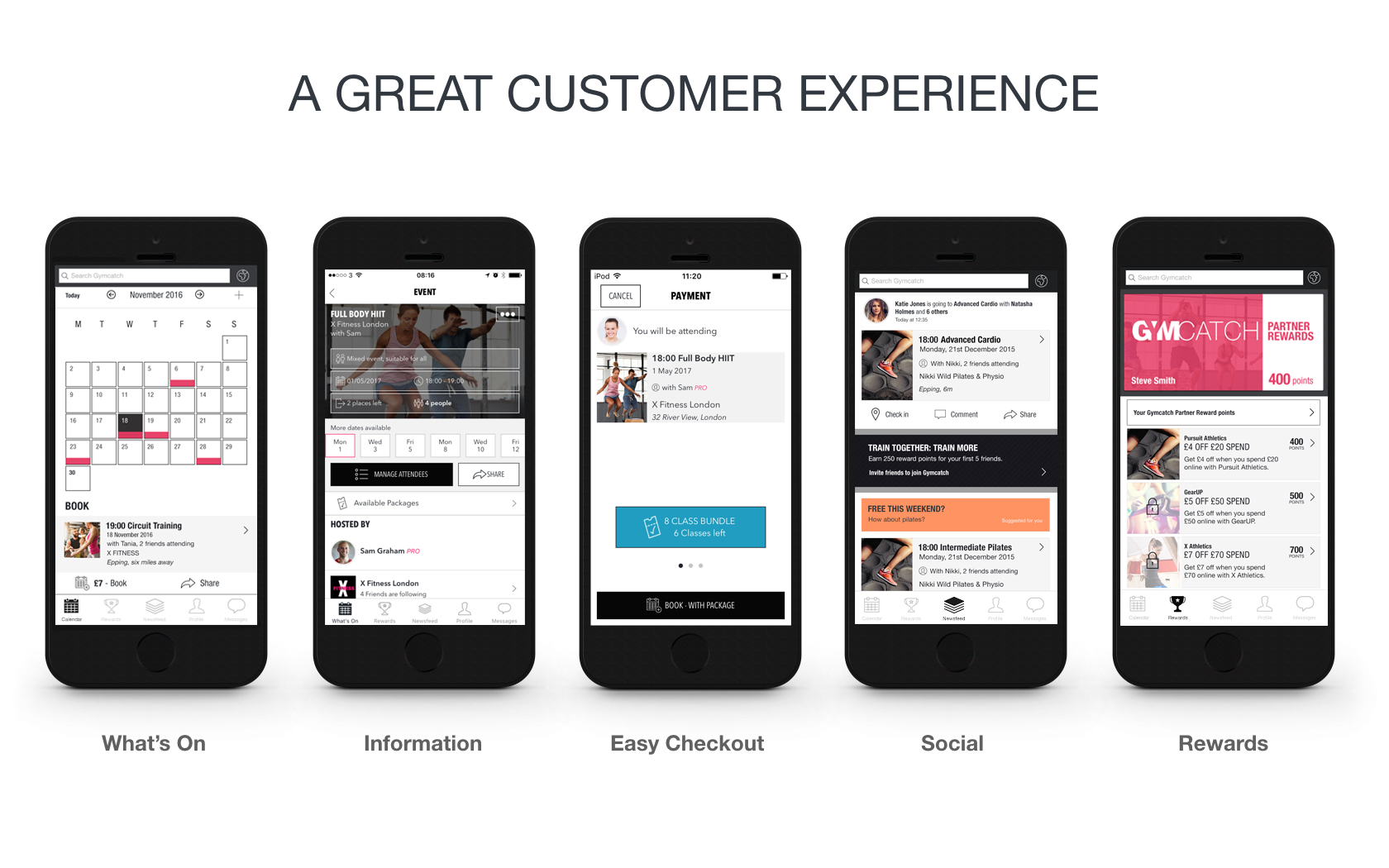
With Gymcatch, any fitness business can now give their customers great mobile convenience. Customers can find, book and pay for your services on iOS, Android and web in as few as three taps.

fitness booking software

Over and above a great booking experience, Gymcatch’s features focus on reducing no-shows, improving cash flow, helping with attendance and payment management, and improving referrals and retention.

Reducing no-shows:

  • Cancellation policies, wait lists and auto-refunds: You can pick from one of our standard cancellation policies or set your own. With clearly displayed policies during the booking process and the ability to take payment upfront, chasing payment for no-shows can become a thing of the past. Automatic waitlists maximize your chances of filling your class. We’ll notify anyone on the list as soon as a place becomes available, and spaces are allocated on a first-come first-serve basis. Auto-refunds enable you to set credit backs in line with your cancellation policy, making time-consuming refund processing a thing of the past.
  • Calendar sync and reminders: Bookings (including joining instructions) can be automatically synced to personal calendars. Reminders are sent 24 hours before a class or an appointment and can be edited by the user in Settings > Notifications.
  • Places available: We know that displaying low attendance numbers can put people off. We therefore display ‘Places Available’, ‘Last Few Places Available’ and ‘Fully Booked’ to make sure this is never an issue.

Easy attendance and payment management:

Track and manage: You can track and update attendance and payment records for sessions either through the business portal or via the iOS and Android apps. We also provide on-the-go business event creation, cancellation and posting functionality in the iOS and Android apps.

Payments: To take payments, you create an account with Stripe via our business portal. Stripe is one of the world’s largest payment providers. They have industry-leading security features, offer custom branded receipts and integrate with many accounting software packages. Gymcatch does not store your (or your client’s) payment details.

Payment charges: Gymcatch does not take a commission on bookings. Stripe only takes transaction fees and these are taken from the listed price at which you sell your classes or packages to your customers. The timing of transfers to your bank from Stripe can be customized, with most users choosing to maintain the standard daily transfer.

Attendance only: If you’ve set your members up on recurring billing and don’t want to move your direct debits, you can still use Gymcatch for attendance tracking – simply gift the package to your members. You can still charge drop-in fees for non-members.

fitness class booking software

We’ve built Gymcatch instructor up, rather than chain down, so whether looking for an instructor, personal trainer, studio or gym booking system, Gymcatch has you and your team covered at the right price.

For more information on Gymcatch fitness and wellness booking software, and how it can help with your booking, admin and marketing. Get in contact to book a demo or start a free trial.

Why your fitness business should make the switch to digital

By Fitness business management archives and news, Fitness industry archives and news, Fitness marketing and social archives and news
fitness business software

In this article, we examine how implementing a digital strategy and the right management software for your fitness business can save you time, improve cash flow and increase revenue.

Creating a digital presence

It’s natural to assume this means a website. A well-designed, mobile-optimized website with clear information, booking options and a strategy to boost SEO can be a great way to generate and convert leads.

Your website and your social channels can be great for your business. If they’re poorly designed or outdated, you can do yourself more harm than good.

If you have a website, this should be viewed as your base. You want to drive people to the website to book new sessions, stay up to date with your business news and read or share interesting articles. This means consistently investing time and/or money into your site to make sure that you are delivering content to your customer.

We’d recommend looking at your website as a progression from a base digital presence that includes a booking and payment system. You should be very aware that your site is not a one-off investment – you still have to drive traffic and keep it current in order for it to be a value add. A Facebook page with a link to a good, fitness-focused booking platform can be a good first step to a full website.

Automate booking processes

Our research shows scheduling issues cause 57% of fitness buyers to renege from their purchase, whether that’s for classes or memberships. Ensuring you’re doing everything you can to provide customers with convenience, flexibility and the information they need and want is key.

Specific features such as automating payment, waitlists, cancellation policies, calendar sync, and reminders can also help you to maximize revenue from existing customers. No-shows are costly, especially at peak times.

Offering improved convenience through app and web booking are also proven techniques for increasing consumer willingness to buy. At Gymcatch, 80%+ of bookings are seen on mobile and over 70% are made outside of normal working hours.

Use packages to increase spend and improve cash flow

Having one set class price or one straight membership price doesn’t increase your customer’s ‘willingness to pay’.

Customers are willing to commit more cash upfront if there’s an incentive to do so. Incentives can come in a price break for bulk buys or a pricing table highlighting the middle option as the best value.

Creating pricing tiers and using block purchasing discounts can incentivise increases and ‘trading-up’ in total spend with your business and drive improved cash-flow through upfront purchases.

Applying deeper discounts to underutilized sessions is also a good strategy and gives you a way of communicating additional value to your customer base.

Keeping track of payment and attendance for these sessions can be seriously time consuming, and many booking systems have nowhere near the functionality needed to help (let alone a consumer-friendly buying mechanism), so be sure to scope implementation thoroughly before introducing this feature.

Keep your customers coming back

This sounds obvious, but churn within the fitness industry is a serious problem. For premises-based businesses, the rate can run as high as 40% per annum. The easiest way to maximize revenue is to plug that leak.

Chances are you got into fitness because you know about fitness, so the game-changers are likely to be the things that you find less natural or especially difficult. You don’t know what you don’t know, right?

Our research shows that only 27% of people who want communications from their fitness provider ever receive any at all. Having fitness business software that gives relevant, up-to-date schedules and information (either automated or otherwise) is important.

Creating a community around your fitness platform by enabling social interaction before and after workouts can also be a great way to create habit-forming behavior. 37% of fitness consumers we surveyed said they find themselves more engaged when there’s a social element to their fitness routine.

Rewarding your customers with unexpected gifts (like a free class, for example) and wider loyalty schemes are also proven techniques to increase retention.

Tap into the power of referrals

After location, referrals are the second most powerful influencer when it comes to fitness consumers buying decisions. Tapping into this is an incredibly effective way of driving new revenue.

This can be difficult though. It’s not easy to remember to ask for a referral, and on top of that it can feel awkward or unprofessional – especially if you’ve asked before.

It’s important, therefore, to look at ways to drive this process naturally. Initiatives such as ‘bring a friend for free’, or referral schemes in which successful referrals bring about prizes (free sessions, etc.) can help to align incentives.

It’s common to look at Facebook check-ins and newsfeed posts to drive this. We find ‘tag a friend who may be interested’ on a post tends to work better than staged check ins or post shares.

Using a fitness booking system that embeds the ability to share sessions across different platforms (email, SMS, own, Facebook, Twitter etc.) is a good strategy as it can create time and location specific context straight away. Check out the full range of features Gymcatch have on offer.

For more information on Gymcatch group fitness business software, and how it can help with your booking, admin and marketing. Get in contact to book a demo or start a free trial.

5 marketing tips for your fitness business

By Fitness business management archives and news, Fitness industry archives and news, Fitness marketing and social archives and news
two women training

In this blog post we look at creating a marketing strategy and the place of digital within the mix.

Spend time building a strategy

The best investment you can make in marketing is in the time you spend planning it.

Start off by being clear on what you want to achieve.  Are you focusing on new customers?  Increasing sales to existing customers?  Retaining existing customers?  If you are looking for new customers, who are you targeting?

We’ll deal with retention in a follow-up piece, so let’s focus on new customers.

Key questions here include: Who are your target customers?  Where are they based?  What are they interested in? How old are they and where do they spend their recreational time?  What are their health and fitness goals?  Are they seasonal or all-year round?

The answer to these questions will likely be right in front of you: your existing client base.

Find out what brought those people to you in the first place and not through the door of your competitor across town.  There is no better insight into what will work best, it is immediately available and doesn’t cost a penny.

This research will inform what content you create through the channels we discuss next. Depending on your services and target client, you may find that success stories, wider wellness education and other benefits work well.  Our own research, indicates that simple communication of location, timing of service combined with some level of peer advocacy score well with motivated buyers.


Don’t ignore traditional marketing

When thinking about channels in which to deliver your content, don’t forget traditional local marketing.  With your target customer profile and messaging established, remember that location is the primary driver of fitness purchaser’s choice of provider.

Coffee houses, school networks, business parks and other local small businesses can therefore be great places to leave material or partner to promote your services.  If people do other things locally, it’s likely that they’d do their fitness locally.  Focus on making it easy to discover you.  Let the locals know you’re there.

Marketing materials like cards and posters still work.


3 digital channels

When it comes to digital, for a small fitness business there can be many digital enablers and keeping them all active can be time consuming.  We recommend that you focus on 3 to both ensure you don’t spread yourself too thinly but also to ensure you are constantly testing and iterating.

We lean towards referral marketing tools, Google and Facebook as the areas to look at first.  Referral marketing is powerful, cost-effective and often overlooked, and with 80% of internet traffic driven by Google and Facebook they are simply too important to ignore.

Referral marketing
There are two sides to this. You and your customers.

Our own research and a big body of marketing work shows your existing customers are your very best source for new leads, so be sure to focus on them.

Clearly you can email or text requests and materials they could share.  This can be hard work and, at times, slightly awkward to ask for direct, so thinking about tools you can use (codes, introductory offers, referral schemes) and regularly refer back to in order to build awareness is a good idea.  Asking for shares/tagging friends in Facebook posts can work wonders and cost you nothing.

Other than our own tools (obviously!), we like InviteReferrals and Ambassador as digital options to assist with this.

Google 
Google ad spend can be expensive and really means you need a website.  If looking at this, the first thing to do is to make sure your website has what it needs to convert.  There is no point driving traffic to a site that doesn’t convert clicks into contact.

Boost your Google results organically – better than having to pay for ads, is being found organically from search.  The key to this is that it is a medium to long-term commitment.  So many businesses start with good intentions but, after a couple of months of not seeing results, give up.

Patience is key here: there is no magic bullet.  This is a long-term commitment.  Creating valuable content through blogs, linking via social and ensuring clients use your website regularly can naturally help you to move up the search rankings. Given location is the number one driver of service purchasing, focus on ensuring you rank well for fitness in your area.

When your website was built (and on your admin console if you have a WordPress site) there should also have been initial SEO keywords used and, if you employ an agency, tweaked regularly.  It’s worth checking that this has been done and finding out what they are and how they are being supplemented with your social media and blog posts. Free SEE plug ins, such as Yoast, can really help you with this too.

Facebook
Once you’ve created a Facebook Page, to do Facebook ads it used to be that you needed to get into Facebook Power Editor (requires Chrome browser).

You’ll now see, however, that boosting posts or ads from your business page is possible.  Setting up campaigns, audiences and ad sets in Power Editor is very easy and intuitive.  The audience features is extremely powerful, with a ready ability to define a hyper-local audience with custom interests.

Ensure you’re messaging on the ads is clear and that anyone clicking is really likely to want your service – you most likely don’t want to be paying for clicks that aren’t motivated buyers. You can test whether this is going to work for you with just a few £100 pounds of testing.

If you don’t have access to a graphic designer to make the related images, online marketplaces like Fiverr and Upwork can be a good source of cost-effective resource but ensure you spend some time thinking about what you want the add to convey and research ads that work well, and test ideas with existing clients, so that you can provide a detailed brief. Sketch is a great, easy to use graphic design tool which you only need to pay for once if you don’t want the on-going updates.

We’d recommend:

  • Starting small with a defined local geography and low daily budget
  • Testing 3 or 4 different ad variations
  • Then doubling down on what works


Make buying easy

It’s one thing generating leads, but how are you converting them to paid customers?  If you have the scale, can afford it, and have the digital know-how, using tools such as Infusionsoft, Pipedrive or Salesforce to create detailed sales funnels is a great way to nurture and convert leads.

The reality is, most people don’t, nor want the cost.  Making it easy for customers to learn more and buy is, however, something that is in your control.

If you have a website or can create landing pages, ensure that you’re marketing, whether on or off line, is directing people to a place where there’s a logic to the information and a clear call to action – whether that be to fill in a contact form or make a booking.

Don’t forget about the final stage too – giving the customer the convenience they experience when booking a taxi, restaurant or hotel is important in converting a sale, particularly a new one.  This doesn’t necessarily mean you need an expensive website – simplicity and ease of use trumps form and there are now cost effective tools available to take bookings online and on mobile.

Track your results

Whatever marketing activity you run, it’s a good idea to keep a record of how many leads you generate, from where they came and how many convert to paying customers.  Building a timeline of activities and checking back on your website analytics (if set-up) or direct enquiries via email can give you great insight into what works and what doesn’t.

In terms of more complex digital tracking, setting up events and goals in Google Analytics as well as custom links in emails that can be tracked to linked pages is a good idea.  If you have the know-how, Google Tag Manager is a great tool to use, enabling you to add Facebook and other pixels without having to constantly update your website.

Tag Manager can enable your Facebook ads to be reported in your Google Analytics page, which helps in keeping things in one place (!), but Facebook Power Editor will also give you good insight into how any Facebook campaigns are performing.

Marketing needs patience, attention to detail and data.  There is no magic bullet: your strategy and tactics will evolve over time as you learn what works and what doesn’t.

The best marketing is often simple and focused but it’s easy to jump into the tactics before thinking through the why.  Is it worth reviewing your strategy?

For more information on Gymcatch group fitness business software and how it can help your yoga, pilates, dance business. Get in contact to book a demo or start a free trial.

How to differentiate yourself as a personal trainer

By Fitness business management archives and news, Fitness industry archives and news

How can Gymcatch help differentiate yourself as a personal trainer

Hypothesis: Most personal trainers that are open for business can’t actually be reached.

The test

In researching this article, our team decided to conduct a small test. We called 50 personal trainers we’d found on Google between 9-5pm on a Tuesday to try and make a booking. If we got through to them, we came clean around why we were phoning and congratulated them on having excellent customer service. If they didn’t answer, they went straight into our data-set.

We’re not a team of data scientists, and as such we’re well aware that a test pool of 50 isn’t always statistically significant. That said, our small test still managed to show some startling results.

Straight to voicemail

How many PTs do you think we were able to get hold of right away? Here’s your answer: 9 out of 50. That’s less than 1 in 5. 80% of PTs could not be reached. 12 had a web form to book one-to-one sessions. 100% had email addresses or contact forms on their websites. We could have chosen to follow-up if we wanted to.

Why is this important?

As a potential new customer looking to start a client relationship in my area, I can easily find PTs on Google, but I can’t actually speak to anyone or purchase anything when I need or am ready to. So in theory, over 50% of the PTs in our mystery shopper exercise technically lost a client.

But…you’d phone back, right?

Consider the customer’s initial decision to establish a trainer-client relationship. A potential customer thinks long and hard about whether personal training is right for them, and then they make the decision based on an intangible reason – like a moment in time or a sudden burst of motivation. They don’t want to send an email, they want to lock in their free test session now.

Customers searching for a service via Google are not choosing you based on personal referrals. They’re making decisions based on who looks the most credible.

Of course, some potential clients will try again, leave a message and be happy to drag out the purchase process with a series of email or texts. But in today’s world of instant gratification where the click of a button can get you a taxi, order your takeaway, or purchase your clothing, your customers might expect to be able to book a training session in the same amount of time.

Why should we make them wait to get access to our premium services?

We’re not advocating that every PT has a receptionist answering telephone calls and fielding customer questions, but there should be a level of self service accessibility that allows your future customers to get in touch directly.


Point made. So, how can Gymcatch help?

Gymcatch you lets you advertise your free appointment windows and allows prospective customers to book in sessions via the web, iOS or Android.

All appointments and reminders sync to their personal calendars and cancellation policies ensure no-shows won’t hurt your wallet.

Our custom packages for classes and appointments also allow you to offer bespoke free trials and bundled sessions, automating the admin tends to be a drain on your time.

In our experience, it’s amazing to see how a bit of innovation goes a long way in helping customers. It’s free to register and take drop-in payments, and we’re the best value management software on the market. Worth a try?


For more information on Gymcatch personal training booking software, and how it can help with your booking, admin and marketing. Get in contact to book a demo or start a free trial. Alternatively check out our fitness and wellness booking software for studios and instructors.

software for personal trainers

What’s driving fitness consumers’ decisions to buy your services?

By Fitness business management archives and news, Fitness industry archives and news, Fitness marketing and social archives and news

In this post, we’ll discuss the health and fitness consumer, trends in their buying habits and how the industry can meet them head-on. We surveyed over 400 buyers and prospects and here’s what they told us…

1. Location, location, location

With increasing health and fitness options and improving delivery, consumers are increasingly treating fitness as a commodity. Of course, this is not to say you can’t differentiate in delivery and build strong relationships, but understanding how most buyers initially choose their fitness provider is important to maximizing lead generation.

Our industry research revealed that location was the number one driver for choosing a fitness provider. Conducting a high level analysis of your local community, researching what times to provide sessions for customers, and making your details and schedule easily accessible will be key to your success.

2. Referrals

The second biggest driver in choosing a fitness service is peer recommendation. Ensuring you are enabling referrals (and making them easy to do) is important, both through incentives such as free sessions and with a booking system that readily allows for information to be shared.

3. Convenience

Health and fitness consumers now spend more time on mobile than desktop and are increasingly used to making bookings for services such as taxis, hotels, restaurants and takeaway through via mobile apps. This trend has been growing for some time, and it doesn’t look to be slowing down anytime soon.

Providing the level of convenience consumers experience elsewhere in their lives is important. 27% of our survey participants said they struggle to find important information from their fitness provider, even when looking for it.

4. Social

Our analysis revealed a clear trend towards customers wanting to integrate a social aspect into their fitness regime. In today’s busy yet increasingly health-conscious environment, fitness consumers would like to use their workout as a means to connect with friends, meet new people and maybe even find that special someone:

– 37% are more engaged when they’re able to workout together with friends

– Over 10% are hoping to meet that special person when they workout

– 13% would like to work out but don’t because they don’t want to go alone

Offering and encouraging a way for customers to bring a friend along for a workout, and allowing them to easily refer sessions to friends is therefore important. Delivering non-fitness events for your community is also a good idea.

5. Rewards

Loyalty programs in retail, hospitality and your weekly grocery shop have proved that they can drive increased purchasing frequency and customer retention.

The downside is that creating and managing schemes can be both expensive and time-consuming. Thinking laterally around how you can provide value through discounted packages is one approach. In those instances, try to clearly communicate the saving aspect against the pay-as-you-go alternative. While the up-front payments can be helpful to your cash flow, you don’t want to create a future expectation for deep discounting.

Occasionally, gifting a free session to a loyal or infrequent customer can also have profound effects, with the unexpected nature of the gift generating a deeper psychological impact and overall better relationship between you and your customer.


The bottom line

Location may or may not be in your power to change but what is for certain is that you have the power to influence criteria 2-5. Gymcatch is here to help.


For more information on Gymcatch fitness bootcamp booking software and how it can help your yoga, pilates, dance business. Get in contact to book a demo or start a free trial.

client management software for personal trainers