
All Posts By

Ollie Bailey

Ollie founded Gymcatch in 2015 with the aim of making participation in fitness easier for all.  As founder, Ollie served as CEO since Gymcatch’s inception. He’s currently focused on growing the platform through strategic partnerships, corporate development and growing the team. Prior to founding Gymcatch, Ollie spent 10 years at Barclays, latterly as a Director covering the TMT sector. He gained an MBA with Honours from the University of Chicago in 2013 and higher class honours in Philosophy and International Relations from the University of Bristol. Outside of the office, Ollie enjoys travelling, playing and watching cricket and spending time with his young family.  He supports a number of charities focused on increasing physical participation.

Marketing for yoga teachers

By Fitness business management archives and news, Fitness marketing and social archives and news

In a world where wellness and self-care are becoming increasingly essential, the demand for yoga teachers has soared. However, standing out as a yoga instructor requires more than just exceptional teaching skills and a stand-out presence. To truly thrive in this competitive landscape, yoga teachers must embrace the power of marketing. A solid marketing strategy can elevate your visibility, connect you with the right audience, and ultimately lead to a flourishing yoga business. 


In this article, we will take a closer look at marketing for yoga teachers, and explore the importance of niche identification, providing valuable insights for effective yoga marketing strategies.

How to market yoga classes


Yoga, with its profound physical and mental benefits, has captured the hearts of millions. However, without a well-defined yoga marketing strategy, your expertise may remain hidden from those who need it most. Marketing is the bridge that connects your passion with your target audience, allowing you to establish a strong presence and make a meaningful impact.


The yoga community is diverse, with various styles and preferences. Identifying your niche is crucial for effective marketing. A niche narrows down your focus and helps you tailor your offerings to a specific group of individuals who resonate with your teachings. Are you drawn to gentle, restorative yoga? Or perhaps you’re more aligned with power yoga that challenges the body? Consider your own strengths and passions, and then envision the type of students you wish to attract.

Effective yoga marketing strategies and tips for yoga teachers

Once you’ve identified your niche, it’s time to develop a yoga marketing strategy that aligns with your core goals. Here are some strategies that can help you stand out and connect with your target audience.


1. Google and social media paid ads 

Paid advertising can give your yoga business an immediate boost in visibility. Platforms like Google Ads and social media (such as Instagram and Facebook) allow you to create targeted ads that reach potential students based on their interests, location, and online behavior. Use visually appealing images or videos that capture the essence of your teaching style to draw viewers in.

2. Google My Business profile

A Google My Business profile is a valuable digital marketing tool, especially for local businesses like yoga studios and instructors. It provides essential information to potential students, such as your location, contact details, and reviews. Keeping your profile updated and engaging can help you rank higher in local searches, making it easier for nearby individuals to find you.


3. Setting up a website and performing SEO

A professional website acts as your digital storefront. It’s where potential students can learn more about your background, classes, and philosophy. Implementing search engine optimization (SEO) techniques ensures that your website appears in search engine results when someone looks for yoga classes in your area. Use relevant keywords and create high-quality, informative content that showcases your expertise.

4. Content marketing (Creating a blog and publishing guest posts)

Content marketing establishes your authority in the yoga world and provides value to your audience. Start a blog on your website where you share tips, insights, and reflections related to yoga and wellness. Also consider reaching out to other wellness websites for guest posting opportunities. This expands your reach and introduces your teachings to new audiences.


5. Setting up email marketing (Including a website newsletter)

Email marketing remains a powerful tool for nurturing relationships with your audience. Offer a valuable lead magnet, such as a free yoga sequence video or an e-book on mindfulness, in exchange for email subscriptions. Send regular newsletters with updates on your classes, insightful articles, and special promotions. Personalize your emails to create a sense of connection.


Growing your yoga business and retaining customers

Consistency is key in marketing for yoga teachers. Establishing a strong online presence and consistently delivering value to your audience will help you build trust and credibility over time. As you implement these strategies, you’ll likely see an increase in student engagement, class attendance, and overall business growth. 


By staying true to your niche and continuously refining your marketing efforts, you can attract a loyal community of yoga enthusiasts who resonate with your unique style. Digital marketing aside, it is also vital you have a streamlined booking system that aligns with your digital presence and is able to track your success, and retain customer loyalty. This is where Gymcatch comes in.


Nurturing growth through effective marketing

In the world of yoga teaching, the ability to positively impact lives is a privilege. However, without a well-crafted marketing strategy and seamless booking practices, your teachings might remain confined to a limited audience. By identifying your niche, embracing various marketing channels, embracing technology and maintaining consistency, you can expand your reach and build your business successfully.


How Gymcatch can help

Gymcatch is a comprehensive booking and management platform designed to empower fitness instructors, including yoga instructors, by seamlessly facilitating class scheduling, payments, client management, and even integrating livestream and on-demand content.


  • Digital marketing alignment: Through Gymcatch, you are able to effortlessly manage and share links for in-person, livestream and on-demand content, creating a digital realm where convenience and growth converge. Seamlessly integrate with platforms like Zoom to streamline the generation, sharing, and updating of meetings in one centralised space. This comprehensive digital offering empowers you, your team, clients, and prospects to access in-person, livestream, and on-demand sessions across various platforms, including web, iOS, and Android. Gymcatch not only enables enhanced customer relationship management but also provides the flexibility to embed the booking process directly into your existing website, ensuring a cohesive digital presence that resonates with your yoga community.
  • Streamlined management: Gymcatch’s yoga booking software allows you to effortlessly manage your class schedules, bookings, and payments. This frees up your time and energy, enabling you to focus on what you do best: guiding your students toward well-being.
  • Personalized offerings: With Gymcatch’s courses and blocks feature, you can offer students the opportunity to commit to a series of classes. This encourages consistent attendance and provides a deeper connection to your teachings.
  • Enhanced client engagement: Gymcatch’s client management tools enable you to understand your students better, tailoring your offerings to their preferences and needs. This fosters a sense of community and loyalty among your student base.
  • Flexible payment options: Gymcatch’s secure payment system accommodates various payment models, allowing you to offer single classes, packages, or block bookings, all while ensuring a seamless payment experience for your students.


Gymcatch’s yoga booking software opens doors to new possibilities, allowing you to reach more students, offer personalized experiences, and strengthen your yoga community. Your dedication to guiding others toward wellness deserves a partner that shares your passion and supports your growth.


How to manage booking availability and cancellations

By Fitness business management archives and news, Fitness industry archives and news, Fitness marketing and social archives and news

Between now and the end of the year we’re going to take a look at 5 areas to help you Get 2023 ready.  Follow us on Facebook, Instagram, Linkedin or Twitter to be sure you don’t miss our follow-up posts.

In our third blog post in the series, we looked at how pricing tactics and how to think about using incentives to increase sign-ups, improve customer retention and motivate referrals.  In this post, we build on that topic to think about operational efficiency and specifically what booking availability and cancellation policy tactics you can employ to boost efficiency and revenue.

Manage when booking opens

Many businesses create, and publish their schedule and create a simple structure whereby anyone can book in immediately, right up to the start time of a session.  Whilst this may be fine if capacity isn’t a constraint, we think it’s still a good idea to consider a more refined policy because of the messaging it can send your customer base…

For example, if you note that bookings for a session open X amount of time before it starts (e.g. 1 week), then you can create (whether it exists or not) a sense of demand/urgency for people to book their space because they may fear on missing out otherwise, as they know others are going to be looking out to grab it.  This additionally prevents customers from booking too far into the future, decreasing availability when there’s a reasonable chance their plans may yet change and be unable to fulfil the booking.

Manage when booking closes

Perhaps less obvious is the idea to set when booking closes for a session past the start time of a session. How many times has someone turned up last minute, or a customer brought someone new for an intro session where admin is done in a hurry?  By closing bookings for a session at a set time after the session finishes you can enable anyone that turned up late or failed to book on to still participate and yet still go back and pay what they owed whilst keeping your and their booking records up to date.

If you record your sessions and want to have a timetabled set of pre-records for sessions (rather than just keeping it in a static on-demand library), this tactic can also be really handy for securing some extra revenue, allowing customers to book the session/pre-record long after it’s finished.

Manage prioritised access

You can also consider whether you want to give certain customers priority access to being able to book before others.

This can be a great way to reward customers for making a purchase.  For example, perhaps a benefit of booking a course/block is that you’ll get a priority buying period on the next course/block that’s released.  This can create good ongoing commitment with an incentive to maintain their spot based on knowledge may not be able to get it back if they don’t recommit.  By making that repeat buying decision, it can also reinforce a feeling of accountability and desire to attend, something that in our experience can naturally wain with standard recurring memberships.

Another option with this feature would be to offer certain sessions as ‘Member’ only, creating further value differentiation as against pay-as-you-go or shorter-term commitment packages.

Enable digital payments

If you’re reading this post, it’s perhaps unlikely that this isn’t taken for granted, but we think it’s worth noting nonetheless!

Some businesses decide to take bookings without enabling any payments, saving some transaction fees in the process.  Whilst this can work ok for some, and indeed Gymcatch can support this too, our experience is that this often proves a false economy.  Remember this gives people that cancel free access to your sessions and the potential to cost you both the money they would have spent, but also the money that someone else who could have booked the space would spend.

You’ll also have to spend time checking bank accounts against attendance and chasing for payment where necessary.  Assuming your time is limited, you should put a cost to this activity in a week – in our experience, even something at less than minimum wage more than pays for the related transaction costs (and in Gymcatch’s case, the software costs too!).

Sensible wait lists

Ensuring you use a waitlist strategy that maximises revenue for your business is important. Historic first-in-line methods can prove counter-productive, as they entail that those who were on them have had the most time to make other plans.  Indeed, the time it takes those on them to confirm or reject the take-up of their place further reduces the time others have to reply.  Far more efficient is to release any spare spaces on an equitable first come first served basis.

Use reminders and calendar sync

Reminders can be a double-edged sword – for some, if they’ve made a booking and it’s on their calendar, a reminder is an unwelcome interruption.  That said, they can be helpful if your client base are busy and decided to disable that setting/haven’t put it in their calendars and we’d always offer a customer the ability to configure their notification settings, so in moderation, they can certainly be value add.

Set a cancellation policy

Setting a policy is a delicate balance between ensuring you give your customers an incentive to book early / flexibility in case their plans change and the fact that you’re running a business and need the certainty of revenue and attendance to successfully deliver your services.

Our data supports the view that offering some flexibility for customers is a good idea and, indeed, now the market norm.  We’d strongly recommend enabling a swap should be the means of ‘refund’ rather than cash. This ensures you don’t miss out on the revenue whilst giving your customers some additional flexibility.

Clearly stating the cancellation policy at booking is evidently a good idea, and ensures any disputes or issues are kept to an absolute minimum.

In terms of what timeframe you’d allow a credit back/swap to a different session, factors such as what number of attendees makes a session profitable, the notice period you think alternative customers would need to be able to fill the space and a headline assessment of your ideal customer’s typical schedule all feed into this equation.

Generally, we see 3 hours – 24 hours before a start time as the norm but do remember you can set different policies for different sessions if you wish.  For example, perhaps you might be more generous with your 5-6:30 pm sessions than in-school/middle-of-the-day sessions because you recognise that work/traffic variables may be more of a worry for your target customers.

In our experience, as long as you build some flexibility into your model and clearly communicate the policy, customers are thankful for whatever you choose so be sure to think carefully about your policy and ensure you don’t encourage behaviour that ultimately costs you money.

With your operating tactics optimised in our next blog post in the Get 2023 ready series, we’ll consider when and how you’re going to promote your business. Follow us on Facebook, Instagram, Linkedin or Twitter to see when it drops in the coming week!

Ollie is the founder of Gymcatch, a booking and customer management software company. Visit gymcatch.com/pricing for pricing information.

What incentives should you offer to your customers?

By Fitness business management archives and news, Fitness industry archives and news, Fitness marketing and social archives and news

Between now and the end of the year we’re going to take a look at 5 areas to help you Get 2023 ready.  Follow us on Facebook, Instagram, Linkedin or Twitter to be sure you don’t miss our follow-up posts.

In our second blog post in the series, we looked at how to set a pricing strategy.  In this post, we build on that topic to think about pricing tactics and what incentives you may consider both to bring in new customers but also to increase spending and retention from your existing ones.

Broadly these incentives fall into three types:

  • Incentives to try/join
  • Incentives to commit
  • Incentives to refer

Incentives to try/join

These incentives are well-known and would include ‘First class free’, ‘First month free’ or ‘Free PT consultation’ etc.

When thinking about these types of incentives it helps to think about three questions.

First, consider how long is needed to determine whether they’ll benefit from your services.  This also, of course, should take into account how long you’re asking your customer to commit. For example, if you’re requiring a yearly contract you may want to give a potential customer longer to decide than if you are offering pay-as-you-go classes.

Secondly, consider how long you think a customer needs to become an engaged customer. How long do they need to build a routine or habit that ensures you’ve converted them?

Thirdly, consider the cost to you of the offer.  Can you afford a strong take-up of the incentive?  The cost to set up and administer the offer should also be factored in.

It is also worth noting, that if you don’t feel a free or longer free period is justified, a discount can work just as well for many, especially in relation to more expensive services.  This approach can also place a higher perceived value on quality and demand which for less price-sensitive buyers may be desirable.

Incentives to commit

These incentives are more business model considerations and would include decisions around whether to offer memberships, courses/blocks and class packs etc.

The consideration here is how much you want to require or even incentivise a bigger upfront commitment as against short-run or even per-session payments.  For many smoothing and visibility of future income is desirable, but in an age where customers increasingly value flexibility, this can be a difficult balance to strike.

For some businesses with high demand or waitlists, the right decision here will be to not incentivise commitment at all, but rather just enable a regular full-priced (e.g. membership, or course/block) for customer convenience of buying or securing a space.

A second option where demand is strong or artificially creates that view is to incentivise commitment based on the access.  For example, you could give members or course buyers priority access to sessions, or an existing course buyer priority over a space on the next.  This can create an incentive to commit without costing you anything.

Where offering a price incentive to commit is desirable, matching that to your customers’ cash flow and own schedule is a good idea.  For example, if your customers generally have children, would it be a better fit to offer term-time blocks rather than year round memberships?  Or perhaps if you want to keep a premium pay-as-you-go pricing model just offering a small discount on class packs that expire based on a date from purchase may make more sense than a discounted membership.

Incentives to refer

Finally, we consider incentives you may wish to offer to customers or local partners for referring new customers.  These are often more costly than standalone free trial products, as it generally makes sense to also include your standard offer for the new customer.

Examples might be a free class pass when you bring a friend, a month’s free membership for a successful sign-up, a gift card on success or even straight cash.  Generally, it makes most financial sense to offer incentives where you can absorb your margin as part of the cost (i.e. it’s not an additional hard cash outgoing), but this of course is only the case if the incentive proves sufficiently motivating as against offering something more tangible like a gift card or cash.

Given their additional cost, we’d recommend carefully considering when and for how long these types of incentives are used, as well as meticulously tracking how successful they are.  The one big advantage they have is that it’s very likely that your existing customer base has good access to potential customers with a similar demographic and set of needs/preferences.  As such, whilst these incentives cost more, there’s every chance they’ll convert well and, indeed, may be less costly than other more outward-facing marketing initiatives.

Thinking more widely than your existing customer base for referrals can also be beneficial.  Perhaps there are local businesses with a large employee base, a service provider or even a coffee house/restaurant that has a client base that would match up well to your services who you could create a more bespoke offer for.  There’s every chance there are businesses that you may even be able to partner with to offer something in return to reduce or even remove the cost entirely.

With your pricing strategy and incentive tactics now thought through, in our next blog post, we’ll move to thinking about operational efficiency strategies, including cancellation policies. Follow us on Facebook, Instagram, Linkedin or Twitter to see when it drops in the coming week!

Ollie is the founder of Gymcatch, a booking and customer management software company. Visit gymcatch.com/pricing for pricing information.

How to price your fitness services

By Fitness business management archives and news, Fitness industry archives and news, Fitness marketing and social archives and news

How to price your fitness services.  What are your customers willing to pay for your services?  How long and what are they prepared to commit to?

Between now and the end of the year we’re going to take a look at 5 areas to help you Get 2023 ready.  Follow us on Facebook, Instagram, Linkedin or Twitter to be sure you don’t miss our follow-up posts.

In our first blog post in the series, we thought about how to define your target customer and how that should inform the services you offer.  In this post, we build on that topic to consider the evergreen topic of pricing. Here we focus on your pricing strategy, and in a follow-up post, we’ll get deeper into specific promotional tactics. 

Be aware of bias

Before we think about your business, it’s worth raising a couple of important human characteristics that invariably influence pricing.  The first is a psychological bias known as ‘loss aversion’.  This bias can unconsciously lead you to under-price your services.  The bias entails that we fear loss more than valuing potential gains, so as applied to pricing, it entails that it’s natural to take what you’ve charged to date, or what the competition charge, as a reference point, fear the worse with regards customers’ propensity to not pay or switch services, and undershoot what you could charge.  i.e. you fear the worse when considering a price change rather than accurately weighing that as against the potential upside.

Secondly, there’s an emotional element to pricing for many. One likely strength of your business is its sense of community and your relationships with your customers.  Many may be considered friends who you socialise with.  This can naturally lead to a desire to please/aversion to confrontation and impact your confidence in making price changes, especially in a scenario where you feel funds are tight.

Of course, both of these natural tendencies exist for a reason, they serve us well in many situations, and ultimately you won’t (nor should you) try to ignore them completely but being aware of them can help in driving a more objective assessment of your businesses’ pricing strategy.

Keeping those tendencies in mind, we move to assess two important inputs to your pricing strategy; your business and your customers.

Your business

As you think about pricing your fitness services, you need to start by ensuring you understand the costs that need to be met by the output of your strategy – i.e. to understand your breakeven point.

Your monthly breakeven point should include your desired base income and all venue and marketing costs.  If you know you’ll be quieter in certain months of the year (and have required outgoings for those months) you should factor this into your thinking for busier periods.  A good exercise during this time is to assess your costs for any efficiencies that can be made. This will help you identify the common costs you can reduce (insert link). This is to say, you’d increase your income target in the busier months to make up for the quieter ones.

A second business-level consideration is cash flow. This is really about the timings for incoming and outgoing cash to your business and ensuring that they are aligned.  Generally, there’s a trade-off between offering longer-term (e.g. monthly memberships, courses/blocks) and shorter-term (e.g. pay as you go, class packs) commitment-based products. 

The former strategy gives greater visibility of revenue but the latter, as it’s normally priced at a premium, would be, all things equal, revenue maximising.  The extent to which you want to smooth cash flow versus relying on regular repetitive purchases feeds into how you price the different products you offer.  Of course, what your customers are able and willing to commit also feeds into this.  Quite often the right answer is a blend, but every business is different and should think through the value to them of each.

Your customers

With your breakeven point and cash flow needs to be established, we’d recommend experimenting with different pricing and customer purchasing numbers on paper or a basic spreadsheet.  From this, you can begin to get a feel for what range of pricing and demand meets your breakeven point and generate some ideas from which to evolve your thinking.

You can now look at your pricing ideas from your customers’ (and target customers’) perspective.  Assessing willingness to pay is difficult but using your customer profile from our first post in the series and reviewing, if applicable, how customer retention changed after a previous price change will all feed into your overall conclusion.  Trying to place them (generalised) on a 1-10 sensitivity scale may help.  If you think they are highly sensitive then you may also want to consider what the local competition is doing and pay some attention to that. This is not to say you match or undercut, more just be sure that the value you offer can be clearly communicated in comparison.

Once you’ve formed a view on price sensitivity you can overlay that against your range of high-low pricing and product commitment (long v short-term options) models to conclude what makes sense for your business.

Track and review

As you launch your new strategy, be sure to regularly review how it’s performing and consider whether the assumptions you’ve made throughout this process are holding true.

Having followed a logical process, you should feel confident in the strategy and launch.  That said, as the above has revealed, determining a sound pricing structure requires you to make reasonable assumptions across often inferred preferences, so ultimately you can’t be 100% certain on how a new offering or changes will land.  As such, how you communicate price changes is also important – our 5th blog post in this series will come back to the subject of messaging.  So, as you launch, stay close to your customers as you launch it and watch for feedback. 

‘Watch’ is the right word, because stated versus revealed preferences can be very different here.  For example, I might indicate that I’m upset about a price rise, but if I still pay/keep coming there’s perhaps a reality that I can’t be that upset about it.  Indeed, it may be that you’d weigh that type of feedback from customers more than others.

With your base pricing strategy now established, we’ll build on these considerations in our next post and look at how you can evolve your pricing tactics to add incentives for current and target customers.  Follow us on Facebook, Instagram, Linkedin or Twitter to see when it drops in the coming week!

Ollie is the founder of Gymcatch, a booking and customer management software company. Visit gymcatch.com/pricing for pricing information.

For more information on Gymcatch personal training booking software and how it can help your business get in touch to book a demo or start a free trial.

How to define your target customer

By Fitness business management archives and news, Gym and studios, HIIT and group, Pilates, Yoga

Who are you targeting as new customers? What do they want from their fitness provider?

Between now and the end of the year we’re going to take a look at 5 areas to help you Get 2023 ready.  Follow us on Facebook, Instagram, Linkedin or Twitter to be sure you don’t miss our follow-up posts.

In the first post of our series, we look at why it’s important to define your target customer and how to do it.

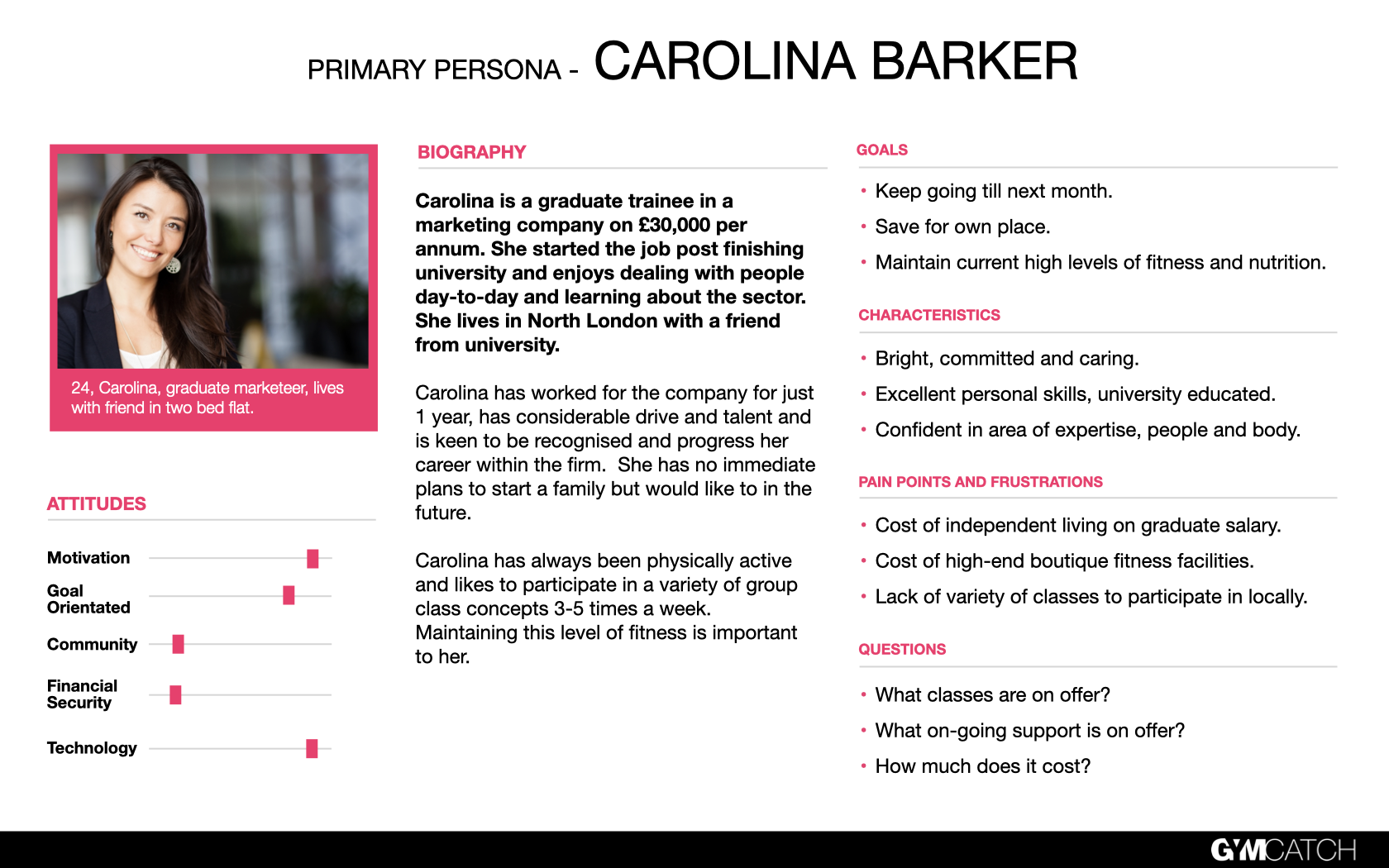
As you plan for 2023 it’s a good idea to take a step back and think about your perfect customer.  Your customer profile informs everything at your business; what products/packages you offer, your pricing and marketing strategy.  We’ll explore those wider theme’s later in this series, but let’s first think about how to build that profile.

The best place to start is by interviewing, or at least thinking about, a selection of your customers that you’d consider ‘ideal’. How you conduct your research is up to you, you could use a free online survey tool, paper questionnaires or even just write down based on your personal knowledge (we know many instructors know their customer base very well!).

Below we explain the four most important factors to consider when building your ideal customer profile.

  1. Demographics

These are personal pieces of information that describe who we are as individuals and include age range, sex, income range, education, and family status. 

  1. Attitudes

These are lifestyle considerations and focus on what habits they follow, and what goals and pain points they have.  What values and interests do they have?

  1. Actions

This is about behaviour.  Consider how, when and what products those customers buy and potentially ask what they’d like to see added.

  1. Location

With the shift towards working from home, this consideration is particularly relevant.  Consider where your perfect customer is based at different times of the day.

With those questions answered, you can build something like this below (not that it needs to be made pretty!)

From here you can do two things:

  • Review your service and product offering in light of attitudes and location
  • Think about where to find new customers

Reviewing your service offering

Whilst there’s every chance that your current services meet your target customers’ attitudes and location you should take the opportunity to review this regularly. Asking yourself a few simple questions can help:

  • Do all of the services you’ve offered in the past still make sense?
  • Do the buying habits (what’s bought and when) reveal anything about what you should increase or decrease?
  • Do your services accurately map to what your customers state they want?
  • Are there any additions that would better fit or complement their revealed preferences?
  • Do the times of day you offer your services fit their routines?
  • Is there a better or additional location you could use that would better fit their routines?

Think about where to find new customers

With your customer profile built you can now begin to think about marketing tactics:

  • Who would they trust for health/fitness advice or recommendations?
  • Where (digitally / in-person) do they hang out?
  • How best to leverage customer referrals?
  • Are there any local/corporate business opportunities to access them?

This may take some time, and some further research so begins to build that understanding in the next couple of weeks as we review the other building blocks of your business. Making notes on your phone, or having a pad with you to jot ideas down as they come to you is also a good idea.

With your ideal customer profile built and service offering reviewed in our second blog post we’ll move on to consider pricing.  Follow us on Facebook, Instagram, Linkedin or Twitter to see when it drops in the coming week!

5 key considerations for managing block bookings or courses

By Dance, Fitness business management archives and news, Fitness industry archives and news, Gym and studios, Pilates, Yoga

In this blog, we consider when to sell sessions in courses or blocks, how best to maximise their operational efficiency, and block-to-block customer retention.

Are courses or blocks right for your customer?

A common theme in our business management content is to start with your customer.  We make no apologies for this, when thinking about your business model you should always start with an assessment of your customer or target customer.

When reviewing whether a course/block of sessions is right for your customers it helps to consider a few headline questions:

  • Do you assess your client’s progress frequently or set short-term milestones?
  • Is there a scheduling reason that courses/blocks may suit your customer better than other models (i.e. pay-as-you-go/memberships)? For example, are you targeting parents that have more availability during school term time?  Or kids where it’s often vice versa?
  • Can your customers afford larger one-offs, or twice over-term payments?
  • Would a perceived lack of flexibility in scheduling put them off?
  • What, if any, service would customers want when you’re not running courses?

When considering these questions, it is perhaps not surprising that many of our business customers who operate this model do so because:

  • They focus on parents as a demographic, effectively dove-tailing with school terms
  • The structure is particularly popular with Pilates and yoga modalities
  • Other programs where clear end results over a period are a focus often use them, with many personal trainers offering either 1-2-1 or small group training courses/blocks.

Your decision-making process can, of course, also be supported by considering whether alternative business models would work better:

  • In instances where courses/blocks make the most sense, it’s often the case that a membership model might be perceived by your customers as too long-term, or a waste of money (as regular commitments mean it wouldn’t get used for much of the year)
  • Whilst pay-as-you-go can supplement course income, running that by itself may also be seen as lacking a desired certainty of attendance for customers and, indeed, income for you as the business owner.  

How to think about retention

A reason we often hear for using memberships over courses is that the former encourages greater retention, as it doesn’t require a regular review / re-purchase. With this, it’s assumed that by surfacing the buying decision regularly you can increase the chances for the customer to cancel/not re-buy.

In our experience, and based on the data we see, this is not a valid assumption, and we believe it rests on some antiquated thinking.  Whilst memberships are absolutely a great model for many businesses, having a recurring, ongoing, payment does not in itself increase customer retention.  Customers are now, perhaps more so than ever, very aware of their outgoings and rights with regards to cancellation.  Just because a payment is automated does not mean that it is unknown or unnoticed.

In our experience, when businesses build a course-centric customer base the ongoing requirement to commit to the next course/block serves to increase retention.  This is because it introduces a ‘fear of missing out’.  This is to say that customers can be made aware that spaces are limited, the course is popular, and if they don’t recommit then they may lose their space with no guarantee they’ll get it back.  This in turn increases their propensity to turn up to sessions and make use of their allocated space.  It therefore actually serves to have a positive impact on accountability, far more so than with a membership where the available sessions are entirely optional/bookable.

In addition, you can increase the ‘fear of missing out’ by layering extra privileges on buyers of your past course/blocks.  For instance, you could offer a priority purchasing window for your next course/block that’s only accessible to those that bought the previous one.  This adds immediacy to the buying decision and, again, drives repeated attendance and accountability which will assist in retention (our industry-leading Priority Access feature can help here).

How to handle swaps and drop-ins?

One understandable gripe we repeatedly hear on our consults is the time it takes many to administer week-to-week swaps when courses/blocks are running.  Illness, transport, childcare, and holidays are common themes that can cause customers to miss scheduled sessions and want to swap into different courses/blocks’ weekly sessions.

Whatever you decide to set for your cancellation policy for sessions, if you’re offering a swap/credit, the process needs to be easy and manageable.  Ensure you find a system (e.g. Gymcatch) that can handle the customer canceling and rebooking of their spot (where there’s availability) across courses/blocks without having to contact you.

With regards to drop-ins, these can be a nice way to both enable swaps, but also boost income if your course isn’t full.  The main thing here is to ensure that you’re not opening up too many spots too early (i.e. too far before their start time).  It’s important to remember that for every drop-in you sell, that reduces your total course capacity (until that session is complete) by one.  So drop-ins at premium pricing are really best used either when they’re made available close to the start date of the session, or if there’s considerable excess capacity in the course.

What to do outside of course term time?

Where courses/blocks are run across school terms, we see two approaches to non-term time.  One approach is to leave the calendar clear.  This can give customers a break, and the flexibility to manage childcare without feeling like they’re missing out or, guilt for non-attendance.  This can also give the business owner some valuable time to refocus on pre-marketing the next courses/blocks and general admin that’s difficult to do during the period of delivery.  If you hire space and variable business costs, it can also mean that you don’t necessarily continue to incur in-term overheads.

The second option we see deployed successfully is for a more flexible set-up over the period.  This might be where you allow only pay as you go, or class pack / bundle-bought sessions.  This can be a great way to boost non-term time income and gives those that want to maintain their routine the ability to do so, all without in any way prejudicing those that can’t.

How to launch or migrate to a new booking system?

If your booking system doesn’t allow for all of the above, then there’s potentially a decision to be made to migrate to one that does.

If you are moving from pen and paper, then planning a launch in between courses/blocks is no doubt a good strategy and can ensure everything kicks off with minimum disruption.  If you’re not digitally confident look for 1-2-1 onboarding as part of the offer.  At Gymcatch, we pride ourselves on ensuring that all customers receive the onboarding support they need.

If you are migrating from a system that doesn’t provide these solutions, or that you’re over-paying for, then thinking about the following can be helpful:

  • When are you going to switch?  Again, in between courses/blocks can make a lot of sense, but equally the system may be able to import/add customers to existing courses/blocks, which may make for a gradual switchover while you’re still seeing customers regularly face-to-face to smooth the inevitable (if hopefully infrequent) questions that come up.
  • Can you import customer data and create their accounts for them?
  • Is it easy for customers to claim their accounts?

We hope you found the post useful.  If you would like to speak about the above and discuss your online booking software and your fitness bootcamp booking software needs, please book a free consultation here or if you’d like to give Gymcatch a go for free for 1 month, please get started here.

8 client lead generation strategies for fitness professionals

By Fitness business management archives and news

Here are 8 productive channels for generating new client leads. You’ll have a good idea of which are going to work best for you and where to concentrate your efforts.


For all of thee angles remember the three golden rules for engaging new clients.

A. Keep It simple. Make sure everything you communicate is clear and concise.

B. Call to action. Always include a clear call to action in your materials and communication. Tell the client exactly what they need to do next.

C. Track your strategies. Design your outreach in a way that you can track what’s working and what isn’t. This might be asking clients to quote “OFFER A”,“PARTNER B” “REFEREE C” when they respond to one of your offers. However you track results, it’s important you do it so you can avoid spending time on strategies that just don’t work.

  1. Referral scheme

    Your existing clients are your best route to new clients. This will happen organically, people talk about things they like and they want their friends to enjoy things they like with them.

    Your job here is to make it easy for people to bring along a friend and to make the client feel valued for making that recommendation.

  2. Physical Advertising

    Your in-person services are what marketeers call hyper-local. Most people do not travel long distances to attend fitness and wellness. Those services necessarily take place somewhere convenient.

    This makes old fashioned physical advertising a valuable tactic. Posters and fliers in prominent local places with high footfall of people in your demographics. Where do your clients go? Get your marketing materials up there.

    And remember – always give include a call to action: whether that be contact details, the times of your sessions… whatever you want your client to do next. Spell it out and make it easy.

  3. Social marketing

    Social networks are where many of your clients will spend most of their online time. If that’s true for your client base, it’s also where you should be investing sales time. That doesn’t mean you need to have a super-sales-y social profile, nor does it mean you need to think about paid ads. But what it does mean that having an engaging, responsive and vibrant social channels where you interact organically with your client base will be a lead generator in its own right. Having an online marketing strategy will help refine your social media efforts.

  4. Reciprocal marketing

    Are there local businesses who have the same client base as you? Some sort of complementary service? This could be a cafe, salon, bookshop? Can you do a deal with them to promote each other to your client bases. A special stamp card for coffee at the local cafe for your clients? 10% off at the book store for your clients.

    And they can offer some sort of reciprocal deal in their stores to promote your business.

  5. Profile building

    Sometimes when trying to generate leads you’ve got to think laterally. Are there opportunities for you to raise your profile locally? Could you volunteer to do a free session at a care home or a youth club for example? Those markets might not be directly in core market but running those sessions first of all might provide a valuable service to the community, but also if you run those sessions other people might here about it? Staff and residents of the care home and youth workers, parents and teachers of the kids at the youth club will here about you with a very positive image.

  6. Local influencer

    Do you know anyone with a big local influence and following? It could be a local blogger or just someone with a high profile in the community. We’re not talking a TV A-lister, just someone locally with a bit of a footprint. If you can find one why not invite them to a class, or if that’s not a possibility, would they be willing to mention your services to their following.

  7. Intro offers

    People’s buying habits differ. For a lot of people, within reason, price doesn’t really come into play when they are making a buying decision. But for others, particularly when trying something new, there can be reticence about spending money on something they aren’t sure if  they will enjoy.

    For that reason introductory offers are a good idea to make the decision to walk through the door a shot to nothing. In the grand scheme of it it’s also a pretty sound investment for you too. Sure, there will be some clients who come for a discount session or a free session and you won’t see them again. But for a far larger number of clients who may otherwise have not taken the plunge, you’ll have a long-term client.

  8. PR

    Advertising can be expensive but you don’t always need to pay to get into local media. PR is strategy of “selling in” a story to media outlets. If you can come up with something interesting and newsworthy your local media might well be interested in covering it. This needs to be something topical, different, extravagant that will interest the readers of the publication. You won’t get much interest if you ask them to run a story saying that you’re launching a new class on a Monday morning. But you might have more luck if you organised a 24 hour event fundraising for a local charity. 

For more information on Gymcatch group fitness business software and how it can help your yoga, pilates, dance or personal training business. Get in contact to book a demo or start a free month.

How to become a fitness instructor

By Uncategorized

A fitness instructor teaches, guides, and encourages groups or individuals during activities and exercise routines. Most of the time, fitness instructors teach clients how to execute exercises and monitor their progress. They also help clients reach their fitness goals, provide them with information about lifestyle, manage their weight, and monitor their food intake. Good fitness will adjust fitness programs to ensure that clients reach their goals while maintaining safety regulations.

One of the first things you should do is determine what type of fitness instructor you want to become. Below are the common types of fitness instructors;

  • Personal trainer – here, you will be dealing with individual clients or families. As a fitness instructor, you may have to travel to your client’s homes and work around their schedules. Most of the time, you work with one client at a time. Therefore, you will have to tailor fitness programs for each client.
  • Group fitness instructor – here, you will be working with a group in a studio or outdoor setting. It involves the use of equipment. As a group fitness instructor, you can lead clients in exercises like Zumba, cycling, and dancing. You will also have to offer some specialized attention to each person in the group for better results.
  • Specialist instructor – here, you get to focus on a single discipline. For instance, you can master one type of workouts like yoga, pilates, or spin classes. Here, you will be working in a studio that specializes in a particular discipline. You will need special certification for your field of focus.
  • Health and wellness coach – here, you will focus on clients’ health, daily routines, eating habits, and making life changes for overall wellness. Your role will help clients get in shape, maintain healthy lifestyles, take care of their bodies and achieve all-around wellness.

When determining the type of fitness instructor you want to become, you need to examine each of the options carefully. That way, you can make an informed decision.

Find out the duties of a fitness instructor

After you have figured out what type of fitness instructor you want to be, the next thing you should do if you are looking to start a fitness training career is to research your would-be duties. Below are the primary responsibilities of a fitness instructor;

  • A fitness instructor’s main duty is to work with individuals or groups demonstrating exercise routines and activities. This also involves teaching participants how to avoid injuries while partaking in exercise routines.
  • As a fitness instructor, you will also have to provide your clients with instructions like breathing and using exercise equipment properly.
  • In a fitness class, music is just as important as the exercise routine and instructions. Therefore, another duty of a fitness instructor is to choose the best music selection for fitness sessions. The right choice of music will help the group or individual get energized and motivated.
  • If you are to work as a fitness instructor for individual clients, you will also have to offer one-on-one consultations. In such cases, you will have to work around your clients’ schedules.

With this information, you can go into the business fully aware of what is expected of you. This means that you will also get the chance to prepare for your duties before taking on clients.

Enroll in a training program

After you have all the necessary knowledge of the roles and duties, you may need some training so that you can provide the best services. The good thing about this career is that you do not need a college degree. You can become a fitness instructor by simply completing a non-degree college or certification program. Most of these courses cover the basics of fitness training like cycling, dancing, and strength training. This step is important whether you want to start your own business or get employed. Most employers prefer trainers with certification.

You can also go a step further and get a degree. With a degree in any health-related major, you will have better chances of getting employed in this field. If you decide to take this route, you can get a degree in exercise science, physical education, or behavioural health science, among other health-related areas. Note that you do not need to have this level of education. You can, most of the time, become a fitness instructor with a high school diploma or an associate. However, a degree will give you an edge in the competitive industry. It is also worth noting that the level of education you need depends on the type of fitness instructor you want to become. For instance, if you’re going to become a health and wellness coach, you may need a degree in nutrition, fitness, nursing, healthcare, or psychology. On the other hand, to become a personal trainer, you require a high school diploma and associate certificate.

Acquire the necessary certification

Note that certification is not mandatory. This is especially the case if you are looking to become a self-employed fitness instructor. However, while some employers may not care about certification, most of them prefer it. Before you look for a certificate, you need to check your laws to see which certification programs are credible. The internet is a great tool for this purpose.

Start practising

Once you have completed the steps mentioned above, you can go ahead and look for a job as a fitness instructor. You can also start your practice if that’s the route you wish to take. You can work at a gym, health club, or hospital.

If you decide to start a career as a fitness instructor, you may want to consider investing in a fitness management software like Gymcatch to manager your clients and payments.

7 tips for streaming online fitness classes

By Fitness business management archives and news, Gym and studios

Fitness professionals have had to adapt their businesses to the surge in demand for online fitness classes. Live streaming, for example, has opened up new ways of conducting businesses, from product descriptions to tutorials and exercising. With the current pandemic, fitness studios around the world can reach out to their clientele and deliver useful fitness classes through live streams. However, they need to do several things right to ensure success. Here are a few tips for streaming online fitness classes.

1. Dressing code for live instructors

It is essential that you wear clothing that is branded with yours or your gym colours and logo. It helps with brand awareness, recognition and professionalism. Besides, avoid clothing that blends with the background as most users cannot tell your form, yet it is vital when exercising. Although you are excising, you should look presentable on camera. However, there’s no need to call a professional makeup team, as looks are not the primary focus of the show.

2. Video tips for streaming online fitness classes

Lighting

Lighting affects the quality of your live stream. You need your audience to see every action in HD quality. Otherwise, those good moves will be of no use to them. You can either have natural or artificial lighting. If you have windows, do your performances facing the source of light. Investing in artificial lighting is a must if you streaming a dimly lit room to avoid negative feedback from clients.

Take Care of Acoustic Noise

Ensure that your voice is clear and audible. You can use wireless lapel microphones strapped to your clothing and connecting to your camera or capture device. Ensure that the room doesn’t have too much echo or noise from other areas. If broadcasting from a home environment, it is essential to warn other occupants that you’ll be live streaming so that there is no disturbance. You may also want to mute all participants in the steam so that they’re not interrupting for others.

Keep Your Set Simple

Only keep the items and props that you will require for your exercises in the live stream. This will avoid you having to run out of shot to pick up a piece of equipment which will make you look unorganised and unprofessional. Also you don’t want anything that might distract the attention of your viewers like cars going past the window.

3. What fitness equipment should you use in your live shows?

Where possible, stick to items that your viewers can find at home. Minimal equipment makes your online fitness classes relevant as your viewers can replicate the same at home. However you can add fitness equipment that can be bought with ease but remember to tell them your clients beforehand what they will need for each home workout. Bare in mind fitness equipment is pretty scarce at the moment due to the current climate so it’s good to be flexible with the requirements.

4. What equipment do you need for live shooting?

Fortunately, live streaming doesn’t require expensive equipment to stream high-quality videos. This can be done by the use of the phone or a USB webcam from your living room. There are also cheap handycam brands that you can purchase for live streaming. When using the phone, ensure that it is fully charged. It should also shoot horizontally so that you can have a wide-angle camera. The camera should be placed on a stable location and at an appropriate height to your type of workout without adjustments.

Gymcatch offers various tools that you can use to schedule multiple sessions and deliver virtual classes through platforms such as Zoom. It enables you to share the link to your online fitness classes with ease and interact with the audience that will be following you online. You can also request payments and manage bookings for online classes with ease.

5. Test everything

Do a test run of your live stream before you go official. Running a free trial or a reduced price while informing your customers there could be technical issues. You could also invite friends and family for test class if you don’t want to push your sessions live until everything is running perfectly, bear in mind they can be biased towards you.

6. Ensure that internet connection is stable

It is vital that your videos are smooth and of high quality throughout the entire session. If several devices are sharing the narrow bandwidth, turn off access for any other device that is not directly used in the workout. This is vital to avoid audio cut-outs and video lags.

7. Deliver the live session professionally

At the start of the session, welcome your clients as you would in an in-premise workout session. Tell them how they can contact you and ask whether anyone would be comfortable being called out in the video. Be careful about the music you play in your videos so that you do not use copyrighted material. There are sync licences to help you use a song in your session. However, you can also get royalty-free music on platforms such as Premium Beat and Artlist.io.

Don’t forget to have fun and enjoy the workout experience. If there are glitches (they do happen even with meticulous preparation), do not stress about them; apologise and continue with your workouts. However, be sure to correct them for subsequent online workouts.

Want to find out more how Gymcatch can help you stream your fitness classes online. Feel free to get in contact with us or sign up for a free demo and we’ll get in contact with you.

How to price your fitness classes online

By Fitness business management archives and news, Fitness marketing and social archives and news

The global pandemic has changed the way most of us do everyday things. People have been introduced to Zoom meetings, podcasts and grocery delivery slots, and online exercise classes have become part of the norm. Virtual exercise has welcomed a different group of people into the fitness community – those seriously pushed for time, folks with caring obligations, the self-conscious and the gym curious.

For fitness providers, now is the perfect time for offering online tuition of all kinds. But if you’ve never held a virtual class before, or you’re adding to your repertoire, you’ll need to know how to price your service.

Here are 5 things to consider when you are working out what to charge for your fitness classes online.

Class size

Think about how many participants you want to teach. If you offer one-to-one classes then the costs will be passed onto a single client, but smaller group classes would lower the cost per person and potentially give you more income.

How does that work? Well, for a personal 1-2-1 class you could charge £40 as an example, but if you offer small group sessions for just 4 people at a time and ask £12 each, each client pays less and you earn and extra £8 a time.

Large classes with limitless participants can be offered at a lower cost per head, but think about how many you’ll need to make your target income? You could think that being cheap will encourage larger numbers, but is it really worth it to you? If you have 20 people logging in at £4 each, it’s the same to you as 16 logging in for £5 per head but you need 4 fewer clients each session which might be easier to achieve. So you need to consider if you’ll be able to fill the class at your selected price to get the profit margins you want.

Check your competitor prices

Sounds like a basic thing to do but checking out your competitors is key. Make sure you understand what others charge for the same service. Make a comprehensive list so you can make a good comparison, don’t just stop once you find one. There are no set rules when it comes to online classes – you will probably find a wide range of prices but you’ll notice a trend to give you a ball-park figure to work with. Take note of what others offer for their price such as the length of class, frequency, number of sessions a week and if there is a cap on the number of participants.

Block booking and packages

Consider whether you want to offer courses or block bookings at a discount. To get clients to pay upfront for a package of 5, 6 or 10 classes will help you with your finances but be aware that this comes with some complications.

Will your customers have to use their sessions for the same class each week or can they log in for your full programme of sessions? How much of a discount will you offer for booking multiple classes at a time and will this still give you the income you need? Clients will want to have the option to miss a session due to sickness or have a refund if they cancel.

Your cancellation policy must be clearly displayed and carefully thought out before you choose this option. There is no reason that discounts like this won’t work well, they simply require some planning.

Uniqueness and popularity

Be aware of the uniqueness of your classes. Straightforward HIIT sessions are more commonly found online so, without an unusual hook, you can’t charge much more than your competitors. But if you specialise in Kundalini Yoga, for example, then you are offering a niche product and can charge a premium rate.

Setting the price

The last thing to be aware of is that people will make an opinion of your classes based on the price. Offer your services too cheap and it will be considered an inferior product. Set your fees too high and clients will expect much more from you, and the extra cost will put off a large group of clients. There is a sweet spot – you just need to find it.

Luckily, you don’t need to think of everything by yourself. Gymcatch has made life easier for online fitness class providers with software that is simple to use. Take class bookings, manage waiting lists and collect payments with ease. If you’ve decided to use promo codes, passes and bundles to get things off the ground, then you can set all of these too – you have complete control. Get in touch for a free demo.